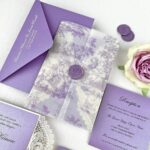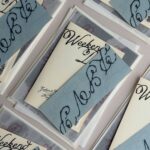
Guest count and the number of cards that need the fancy treatment will decide which of these suits you, since the ideas run from a wax-sealed botanical envelope to scrolls, foil stamping, die-cut shapes, and lace and pearls assembled by hand, and most of the cost sits in per-piece work.
A small guest list can carry hand-finished pieces like lace and pearls or wax seals; a large one is better served by one standout element, such as a foil-stamped monogram, with plain ink everywhere else.
1. Custom Illustrations
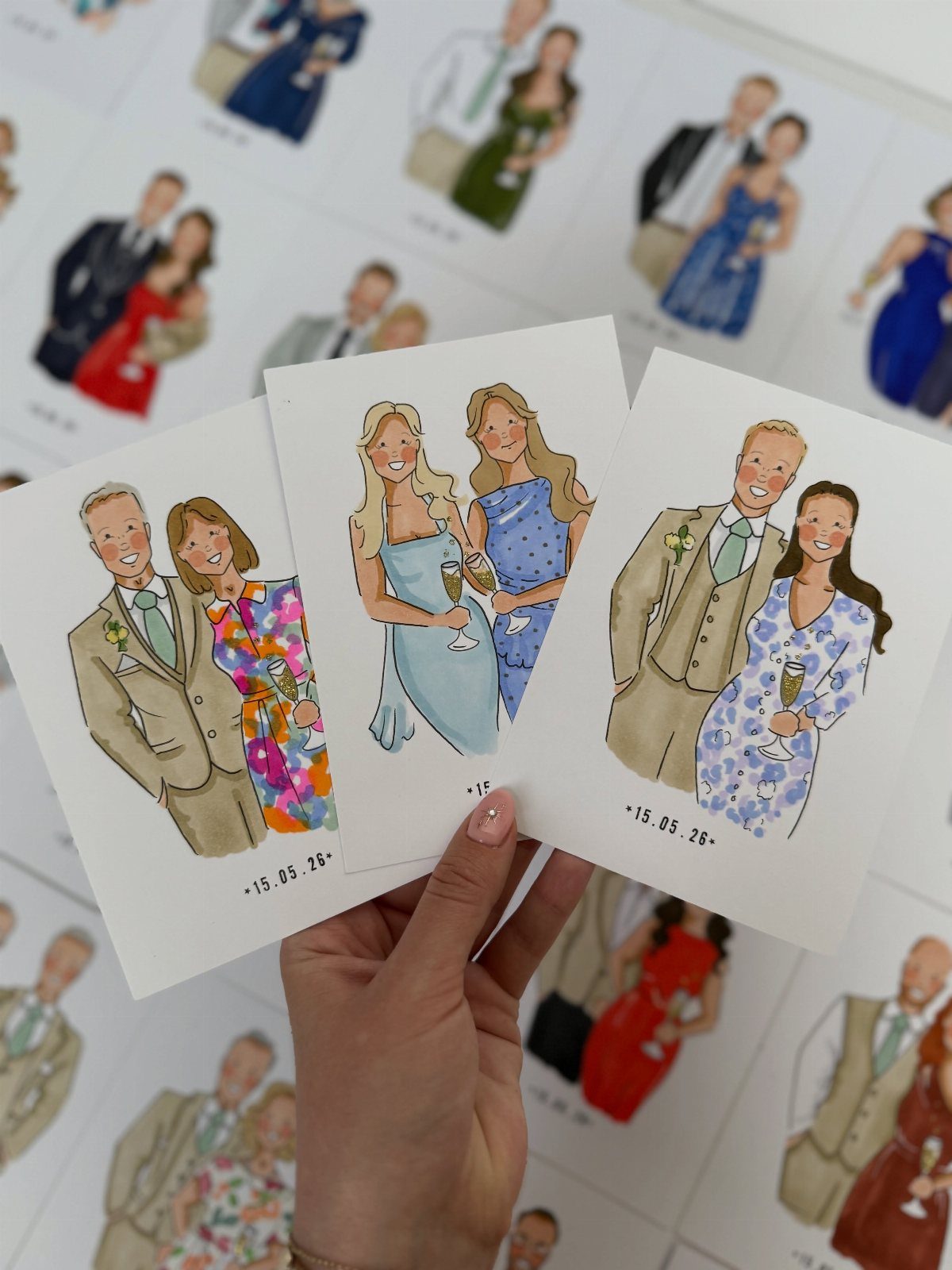
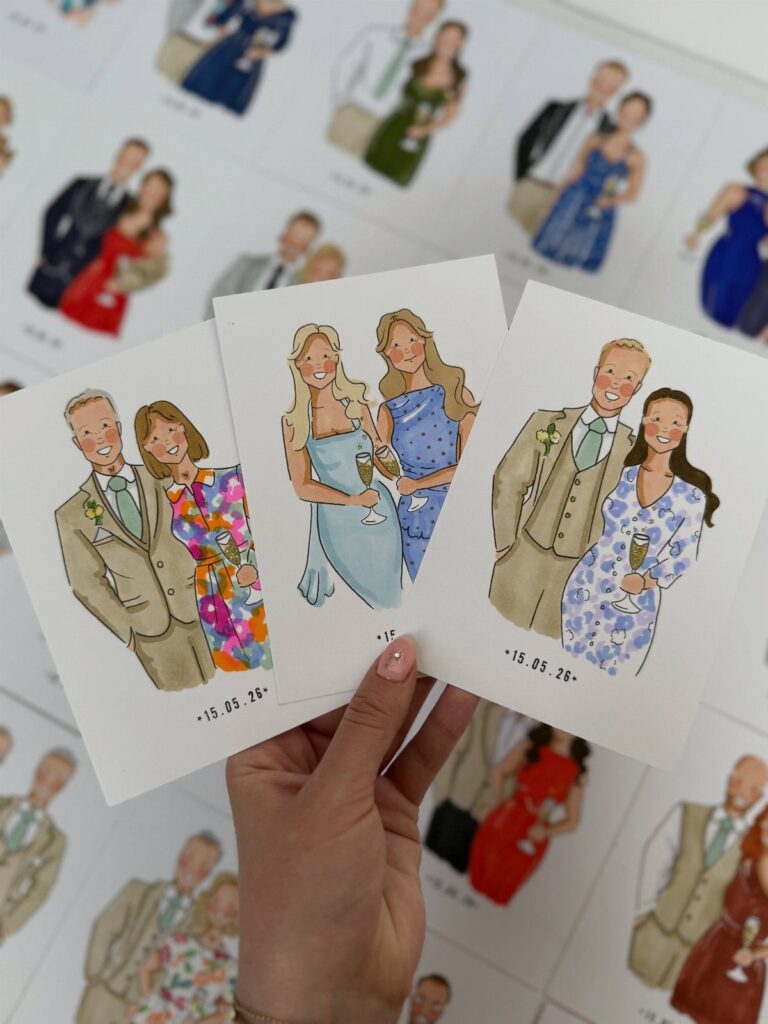
A painted portrait of the two of you on the card does what a stock monogram can’t: guests recognize you before they read a word. Watercolor suits this well, since the soft edges keep formal outfits from looking stiff.
Hire an illustrator early and send clear photos of your outfits. Ask for the date to be lettered into the artwork itself, as it is on these cards, so the whole piece works as one design.
Expect to pay more than for a template, so a small print run keeps a modest budget intact.
2. Fabric Invitations
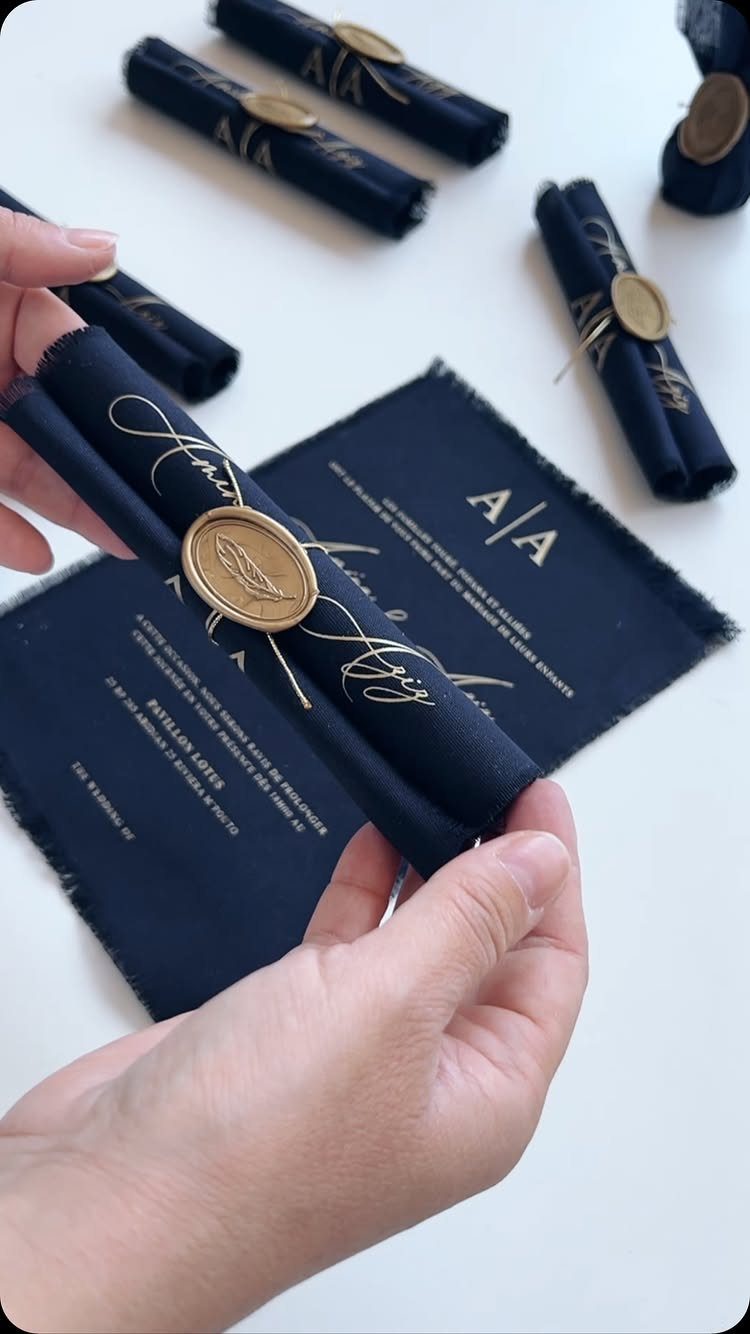
Fabric invitations work best rolled or folded with a closure, such as a wax seal or ribbon, because the cloth itself becomes the keepsake; expect to pay more than for card stock, and plan on a padded mailer or box for postage.
A flat fabric card in the same navy can sit beside it for guests who need the details in an easier format.
Fabric costs more than paper, and I would order a sample before committing to a full run.
Check that the gold lettering stays crisp on the weave. For a tight budget, make the rolled version for close family and use flat cards for everyone else.
3. Custom Monogram Invitations
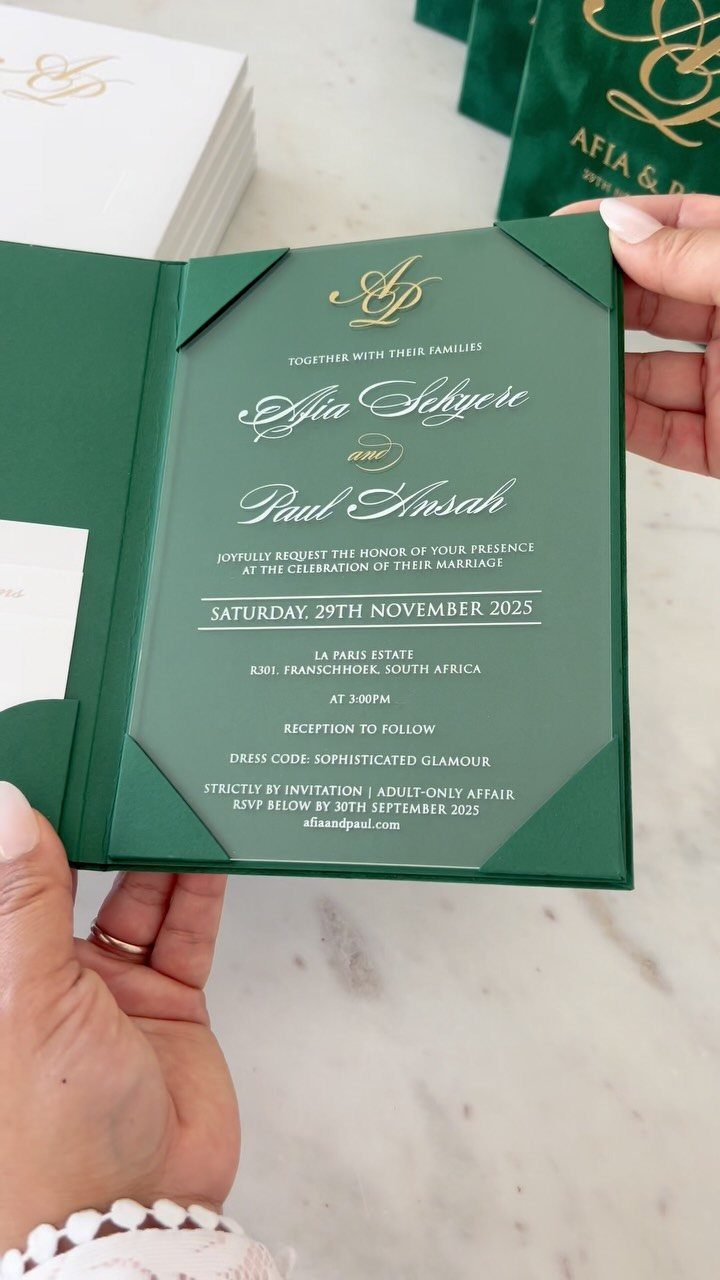
Initials drawn once can carry the whole wedding. A gold monogram on green stock reads as formal without extra ornament, and the same mark can return on menus, place cards and favors.
Ask your designer for the monogram as a vector file, so it can be stamped, printed or cut at any size later.
That one file saves you paying for the design twice. I would keep the surrounding text in a simple gold cursive and let the monogram be the only decoration.
4. Foil Stamping Invitations
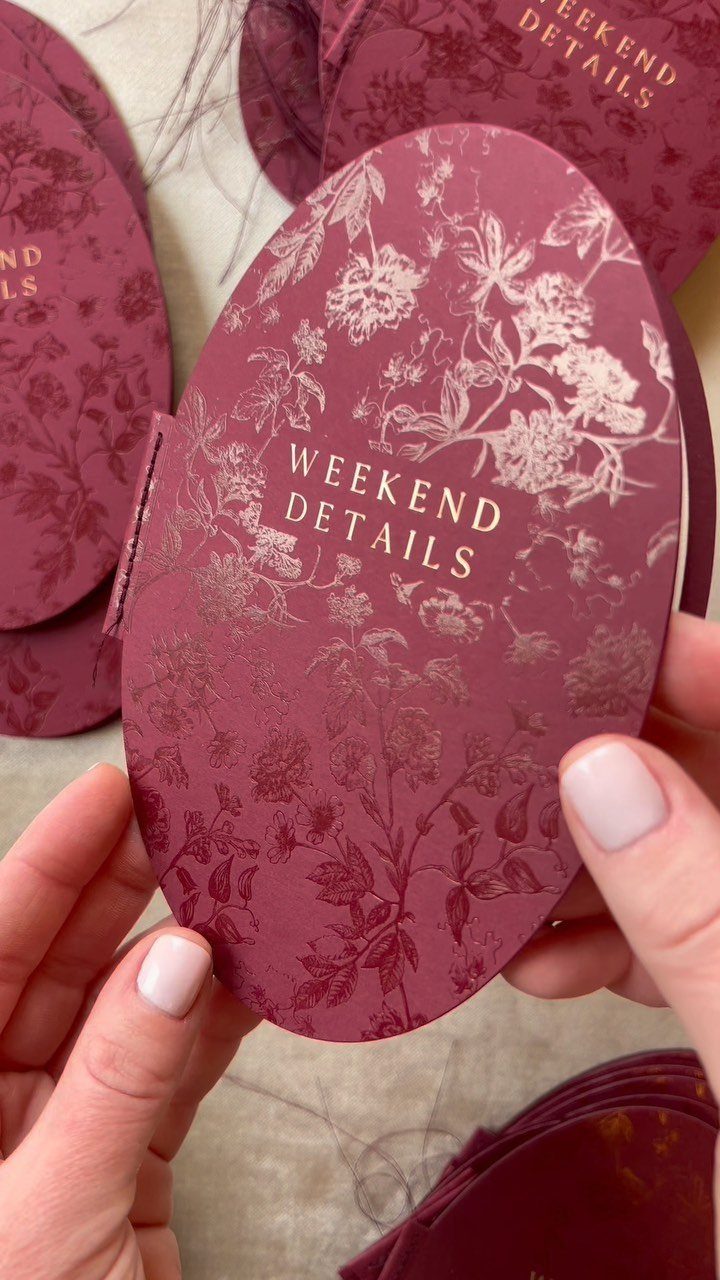
Foil stamping presses a thin metallic layer onto the paper with heat, so it catches light in a way flat ink can’t; it adds cost per piece, so I’d save it for one element, like a monogram or a border, on a single card.
The oval shape adds to it, and a card labeled "WEEKEND DETAILS" is a good place to spend the foil.
Foil is priced by the stamped area, so keep it to a small spot on the main invitation or the details card and print the rest in plain ink.
Keep the pattern fairly bold, since very fine lines can fill in. Ask the printer for a proof before approving the run.
5. Die-cut Invitations
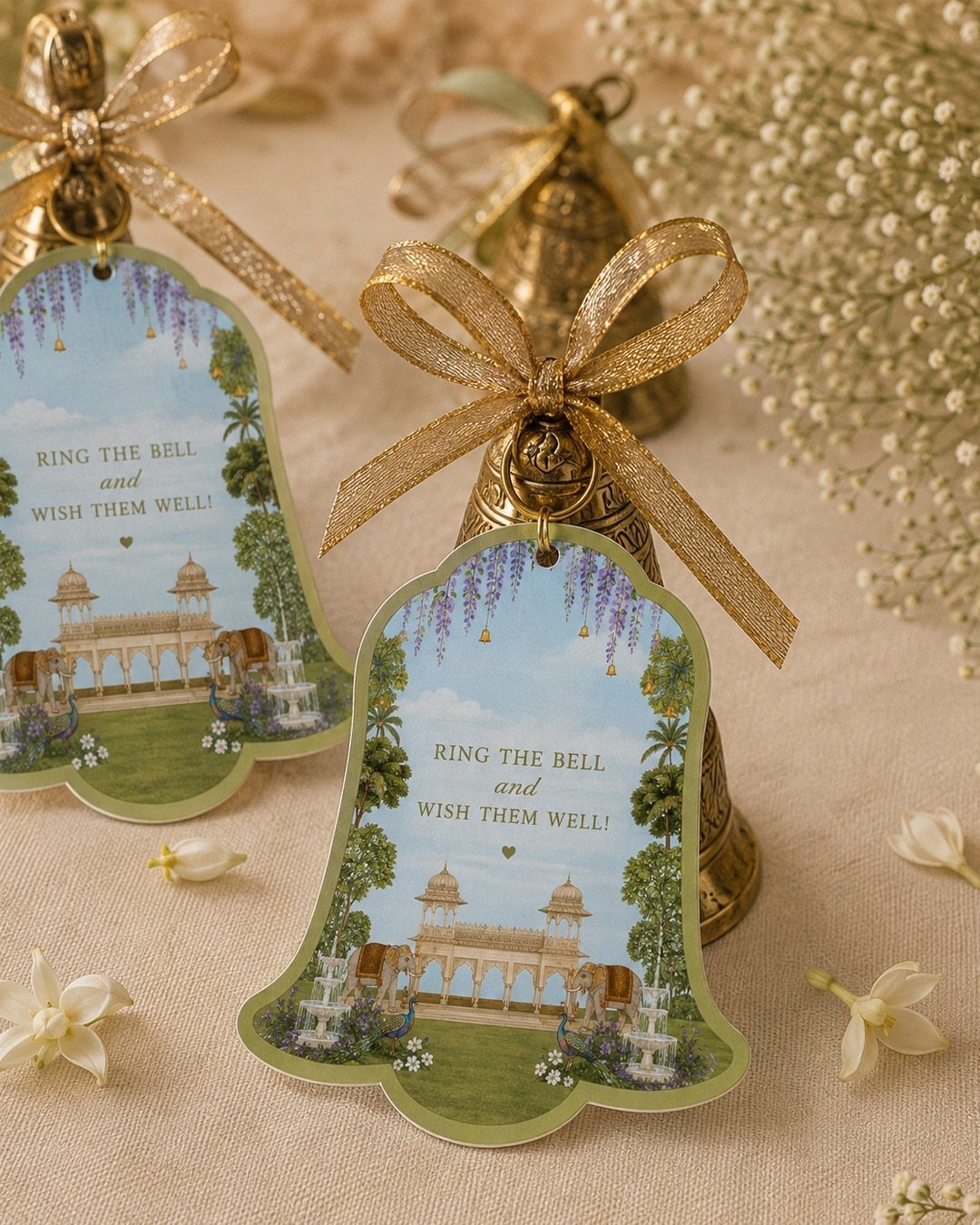
Die-cutting means paying for a custom blade, so it pays to commit to one shape and order enough copies to spread that cost.
Gold ribbon on the bells adds a tactile finish without much extra cost.
Keep the wording short, since a curved card has less usable space than a rectangle. Ask your printer whether the odd shape needs extra postage.
6. Coat of Arms Invitations
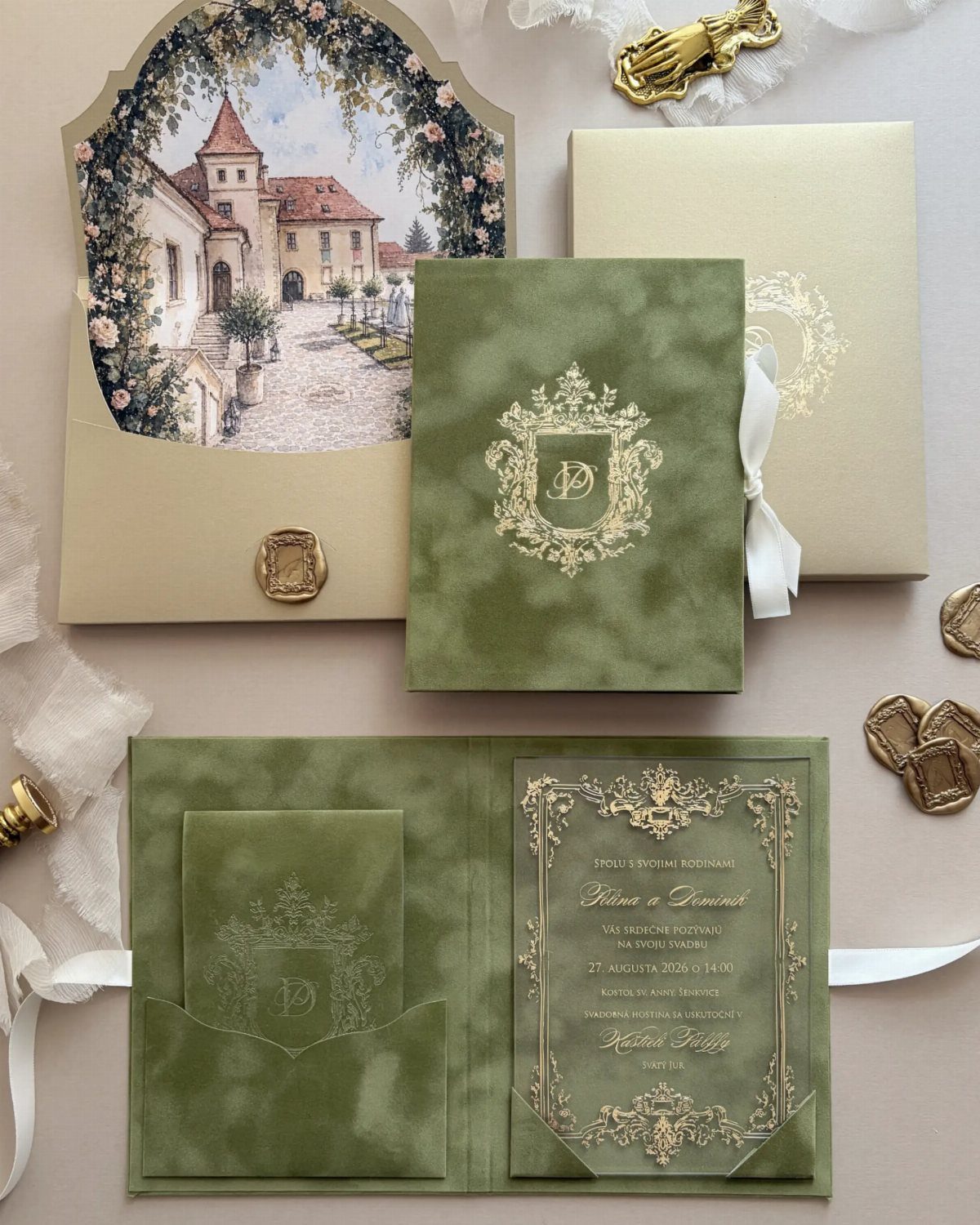
A family crest in gold foil on green and cream stock gives an invitation the weight of an heirloom.
If your family has no crest, a designer can draw a new one from your names, places and symbols that matter to you.
I would pair the crest with a painted scene, as on these cards, so the invitation tells a place as well as a name.
Foil on the crest alone keeps the cost down. Proofread any foreign-language text with a native speaker before printing.
7. Scroll Wedding Invitations
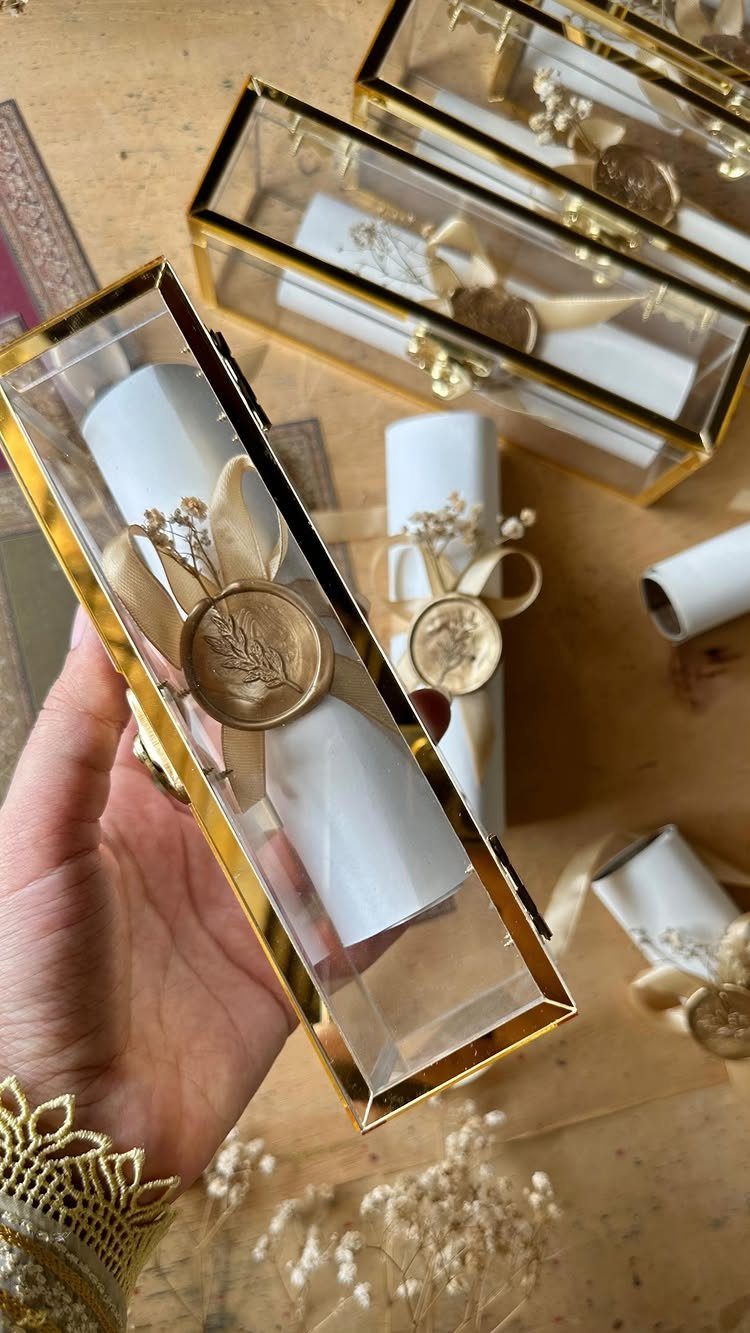
A rolled scroll turns the invitation into something guests open slowly, and a gold ribbon with a wax seal makes that moment feel ceremonial.
Presenting each one in a glass box with gold edges makes it a keepsake as well as a notice.
Boxes add cost and weight, so I would box only a short list, such as parents and the wedding party, and tie plain scrolls for everyone else.
Ask your printer about postage before ordering, since a tube or box rarely mails like a flat card.
8. Botanical Wax Sealed Envelopes
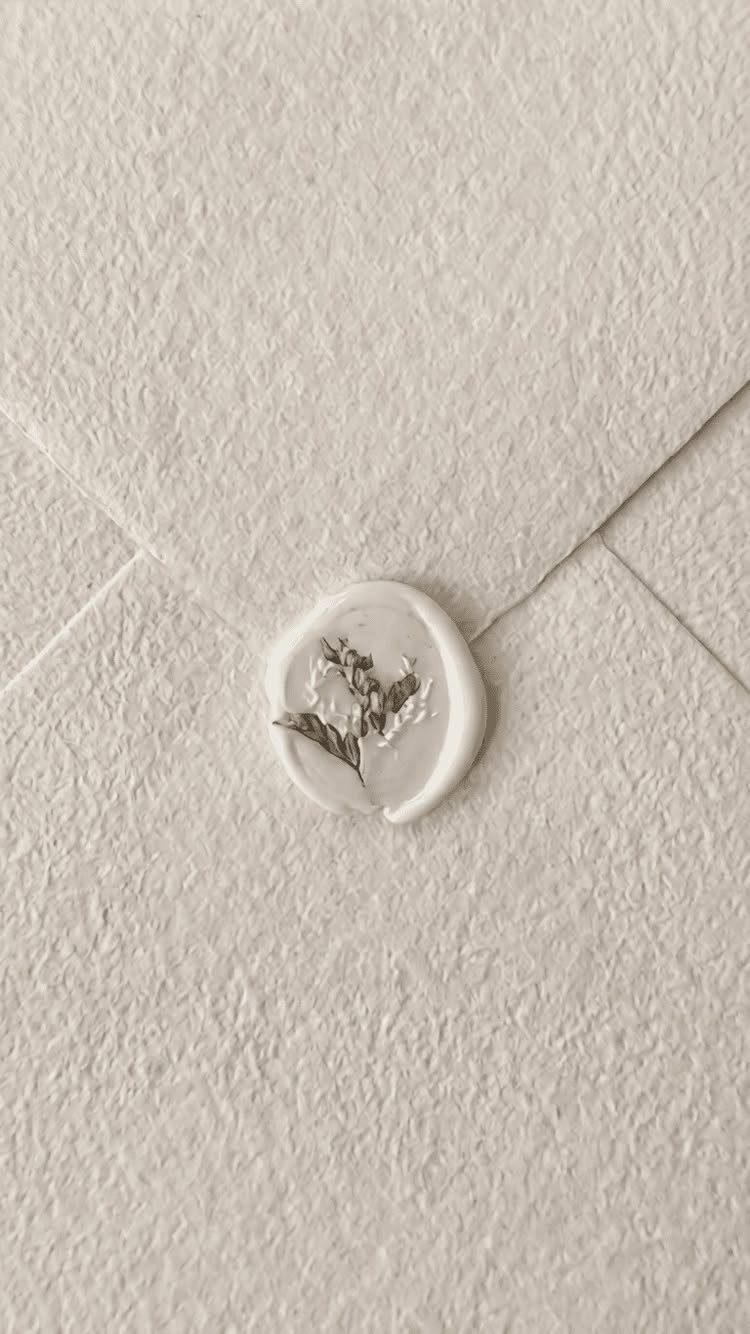
Pressing a dried sprig into white wax gives a plain envelope a small botanical detail. Textured off-white paper suits it, since the seal stays quiet against the grain.
I would choose a flat, thin sprig, because a bulky stem makes the seal lumpy and harder to mail.
Test a few seals on spare envelopes before the real batch, and let each one cool fully before stacking. Sealing every envelope by hand takes time, so set aside an evening.
9. Lace and Pearl Invitations
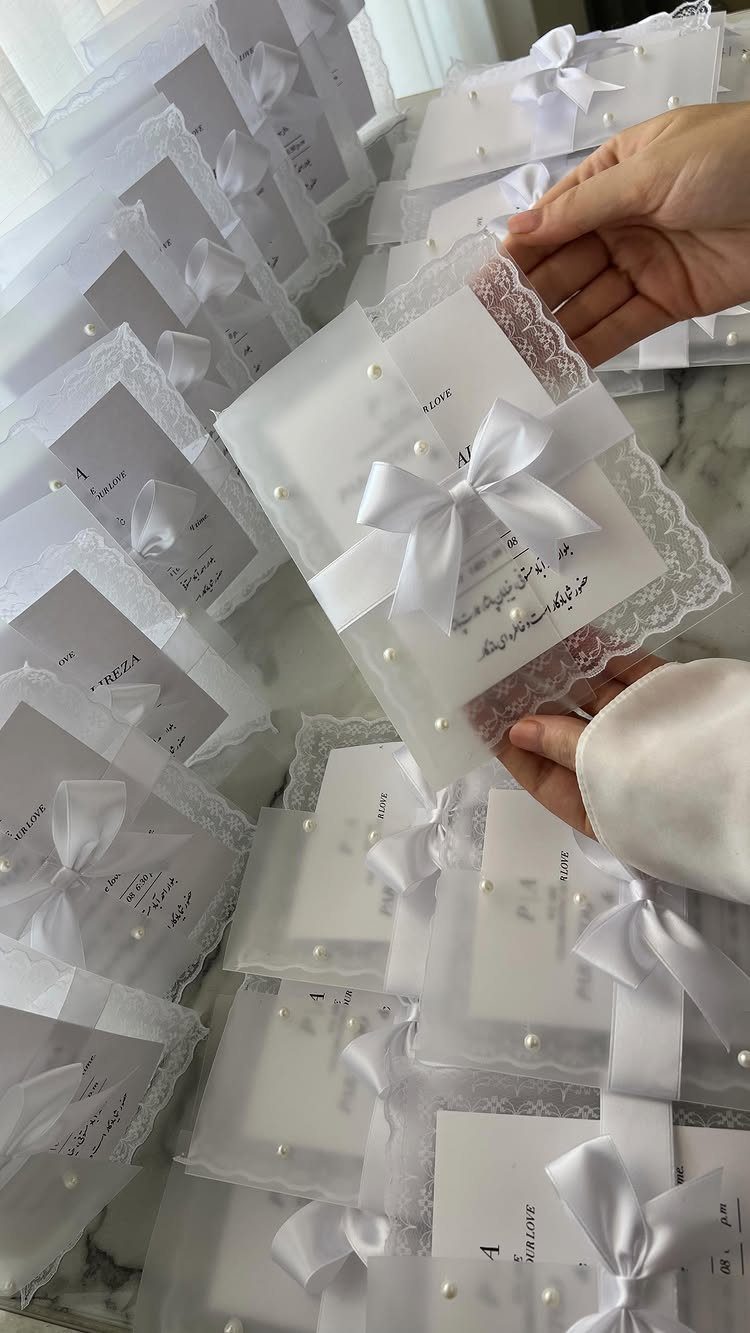
Lace trim, a satin bow and a few pearls give an invitation a bridal feel before anyone reads the date. Keep all three on white, as here, so the texture does the decorating and nothing competes.
Each piece is added by hand, so cost climbs with the guest count. Ask for a sample first, and check that the bow and pearls sit flat enough to mail without crushing.
10. Potted Plant Invitation Display
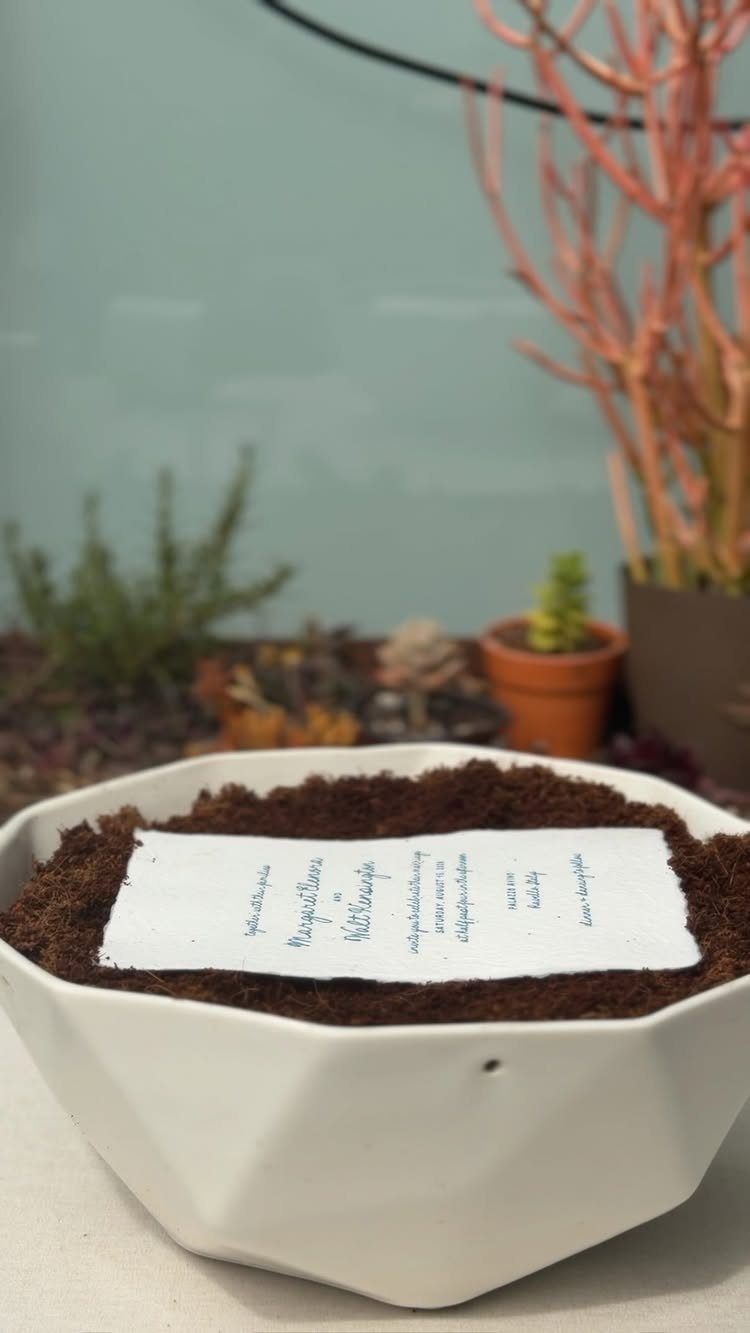
A handwritten card resting on dark soil in a modern ceramic bowl makes the invitation a small living display. White geometric ceramic against the soil gives it a clean, gallery look.
This is better as a showpiece than a mailer: soil and bowls are heavy and awkward to ship.
I would make one for the welcome table, or a few for the parents, and send ordinary cards to everyone else. Handwriting keeps it personal and cheap.
11. Heart Hands Photo Invitation
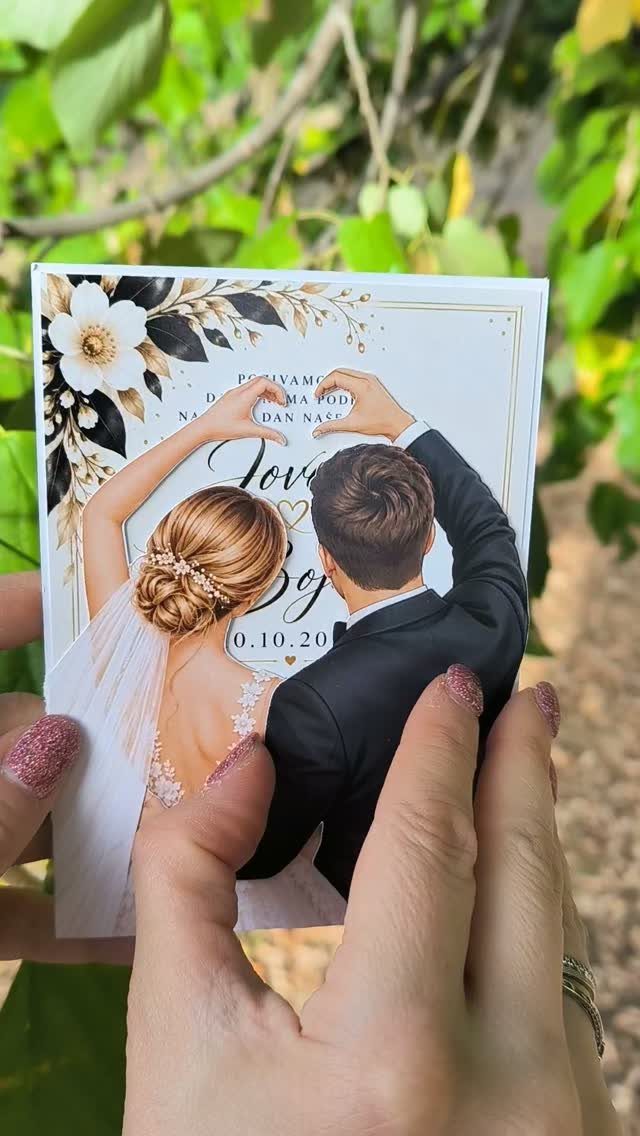
A photo of the two of you making a heart with your hands tells guests who is getting married and how happy you are, with no illustration budget at all.
A single word like "Love" plus the wedding day in numerals is enough text.
Shoot it outdoors against green, as here, and choose a shot where both faces and the hands are sharp.
Print a test card before ordering, since photo quality shows quickly on paper. Write the date in a format guests will read the same way.
12. Vellum Wrap Wedding Invitations
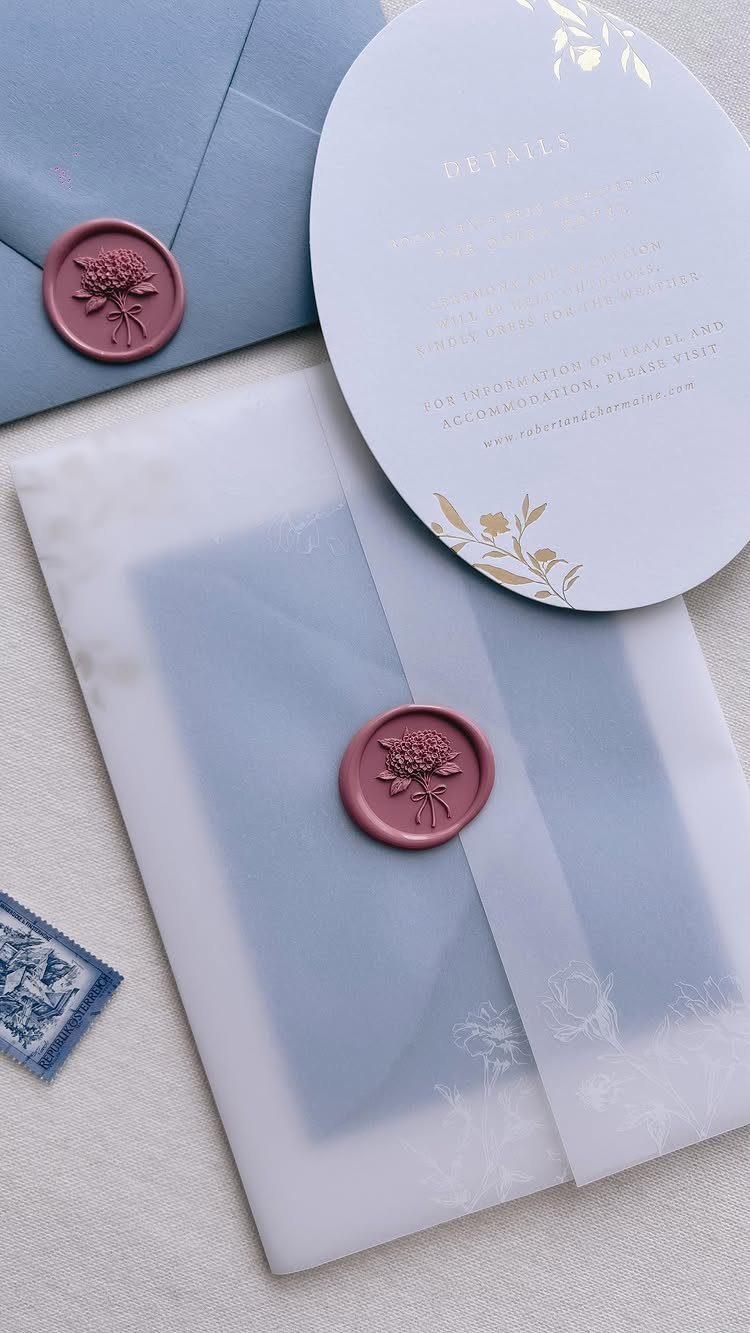
A translucent vellum wrap lets the blue card show through while it holds the whole suite together. A burgundy wax stamp closes it, and the warm red against blue looks deliberate.
Vellum costs little compared with custom printing, so it is an easy way to make a basic suite feel layered.
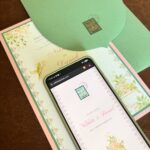
I would put the website on a small detail card, as here, and keep the wrap itself blank. Test the wax on vellum before committing to a full run.
Personalization Options
Start with the theme and the palette, then add detail. Colors matched to your palette tie the suite together faster than any single extra, and they cost nothing beyond the design time.
Envelope liners are an easy place to add personality, and so are ribbons and wax seals. If you want something beyond flat paper, materials like acrylic, wood, vellum and layered paper add texture and dimension.
Pop-up designs and origami folds can tie an invitation to your theme, but they are fiddly to assemble, so ask for a sample before you commit.
Match the formality to the day. Black-tie and casual beach weddings can both carry a custom invitation, as long as the materials and details suit the tone and setting.
Printing Techniques
Digital printing is the budget-friendly workhorse, and it now handles true white ink.
Most white text you see on printed items is really the paper left unprinted around a colored design, so white ink is a different thing: it prints a solid white layer on top.
White ink shows best on kraft-colored recycled cardboard or a deeply colored, textured stock, where it stands out against the darker surface. Not every print shop offers it, so check with yours before you fall for the look.
Embossing is another option, and it adds depth the way letterpress does. If you want more than one technique, combine two on the same card rather than stacking three, so the design stays readable and the cost stays in check.
Keepsake Value
Guests keep an invitation when it feels personal. A card tends to end up in a keepsake box when it has an unusual material, a part the guest can touch or move, or a detail written just for them.
An illustration made for your wedding does the most for sentiment, because it feels intimate in a way a template cannot.
Spend where a guest will notice: the material they hold and the artwork they see. A card that earns a spot on a shelf or fridge is worth more than extra embellishments that get lost in the envelope.
Inspired by the charm of an artist’s sketchbook, scribble-style invitations bring a sense of expressive, hand-touched beauty to wedding stationery. This trend leans into whimsical, simple linework that feels elegant but spare and refined without trying too hard.
Frequently Asked Questions
What are unique wedding invitation options?
A custom painted illustration of the two of you is the one I’d pick first, since guests recognize you before reading a word.
Other good choices are fabric rolled with a wax seal or ribbon, foil-stamped monograms, die-cut shapes, scrolls, and vellum wraps over a colored card.
Pick one standout feature and keep the rest simple, so the cost and the design both stay under control.
Can wedding invitations be personalized?
Yes, and the cheapest way is to match the ink and paper colors to your palette, which ties the whole suite together for little more than design time.
Envelope liners, ribbons, wax seals, and a monogram drawn once and reused on menus and place cards add more.
What printing techniques are popular for wedding invitations?
Digital printing is the budget workhorse, and newer presses can lay down solid white ink, which reads best on kraft or deeply colored textured stock.
Foil stamping adds a metallic shine and is priced by stamped area, so foil only one element like a monogram or border.
Embossing adds depth much like letterpress. Two techniques on one card is my limit; a third crowds the design and pushes the price up.
Is foil stamping worth the extra cost on invitations?
It is worth it when you limit it to one element on the main card, such as a monogram or border.
Because foil is billed by the area stamped, I’d print the details card in plain ink and save the foil for one small spot.
A fairly bold pattern holds up best, since hairline strokes tend to fill in, and a proof should be in your hands before the full run starts.
Do unique wedding invitations cost more to mail?
Often they do. Fabric, scrolls in tubes or boxes, and odd die-cut shapes rarely mail like a flat card, so get a postage quote from your printer first and place the order after.
A padded mailer or box may be needed for fabric. Heavy pieces like a potted-plant display are better kept as showpieces for a welcome table than mailed.