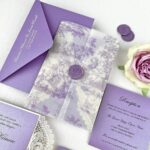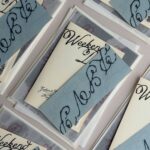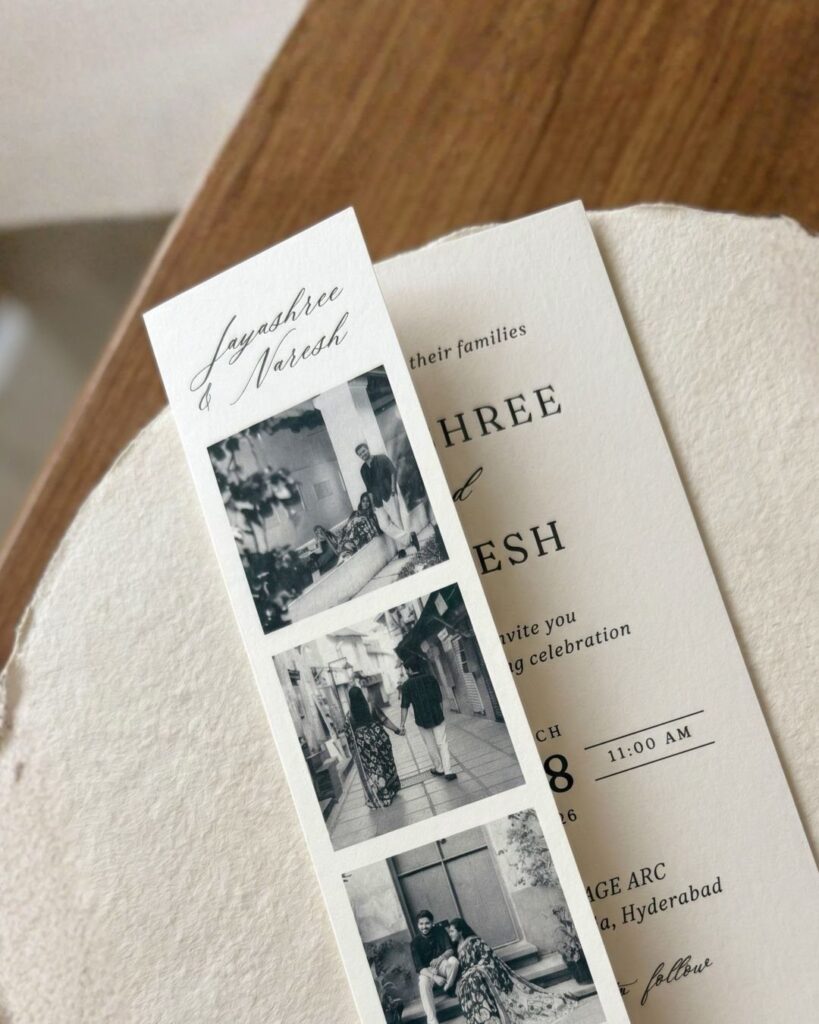
The list runs from a minimalist card to pop-up and die-cut pieces, fabric, a credit card format and pearl-and-crystal framing, and each added fold, cut or embellishment pushes the price up.
Guest count settles it: a splurge like the pearl and crystal frame or a die-cut shape suits a short list, while a long one does better with a minimalist design and a belly band closure.
Whatever you choose, price the full suite with reply cards, extra envelopes and postage before you commit, because printed invitations average around $500.
1. Minimalist Wedding Invitations
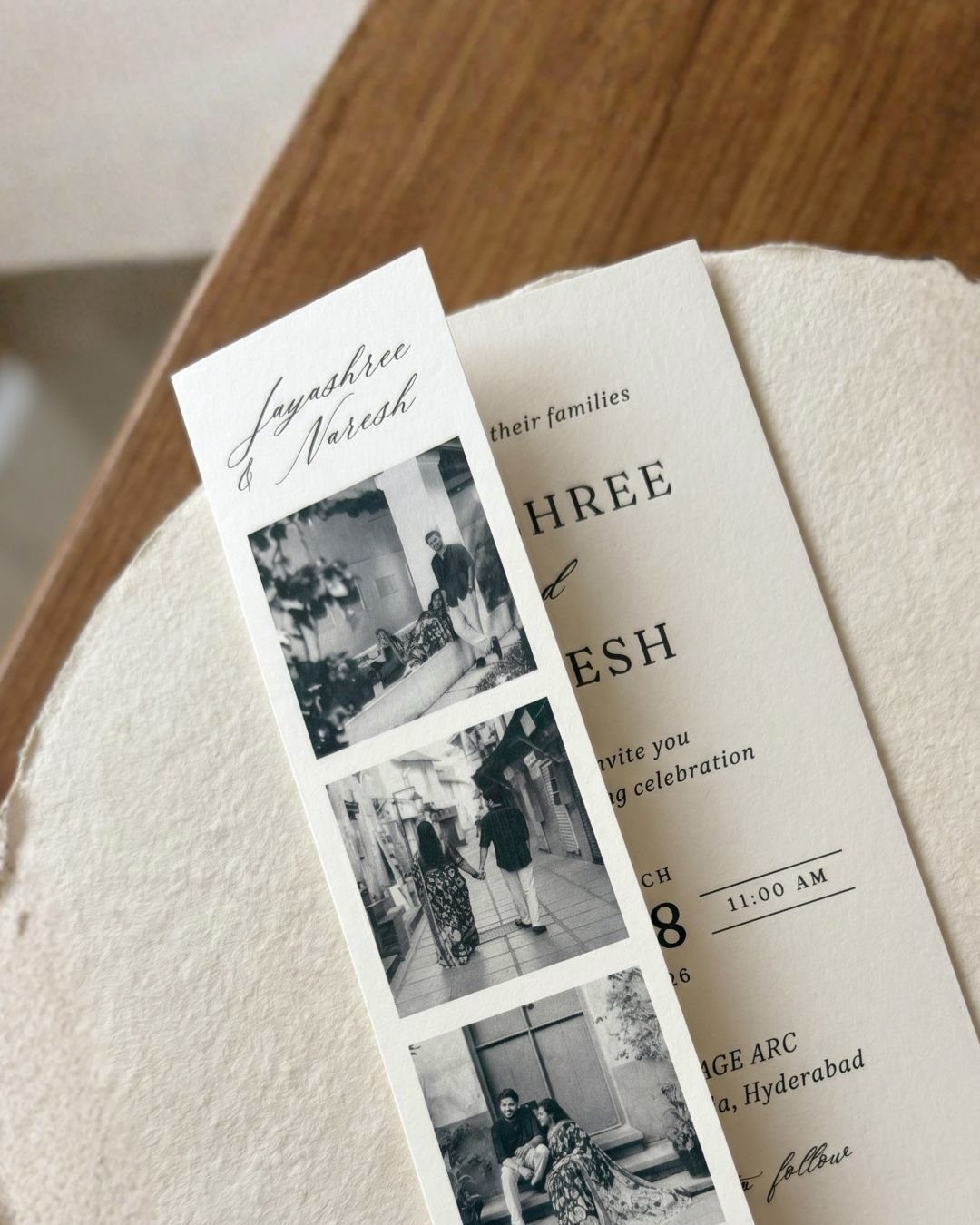
A single photo strip, 2 names, a city and a date: that is nearly the whole invitation, and it works because nothing competes with the faces.
Printing a photo strip in black and white keeps it looking intentional, and it hides the mismatched color and lighting of snapshots taken on a phone.
Choose one typeface, set the text small, and leave generous white space around it. Matte, lightly textured stock suits the look better than glossy.
A card this plain has nowhere to hide a typo, so proofread the names and the date twice.
2. Illustrated Invitations
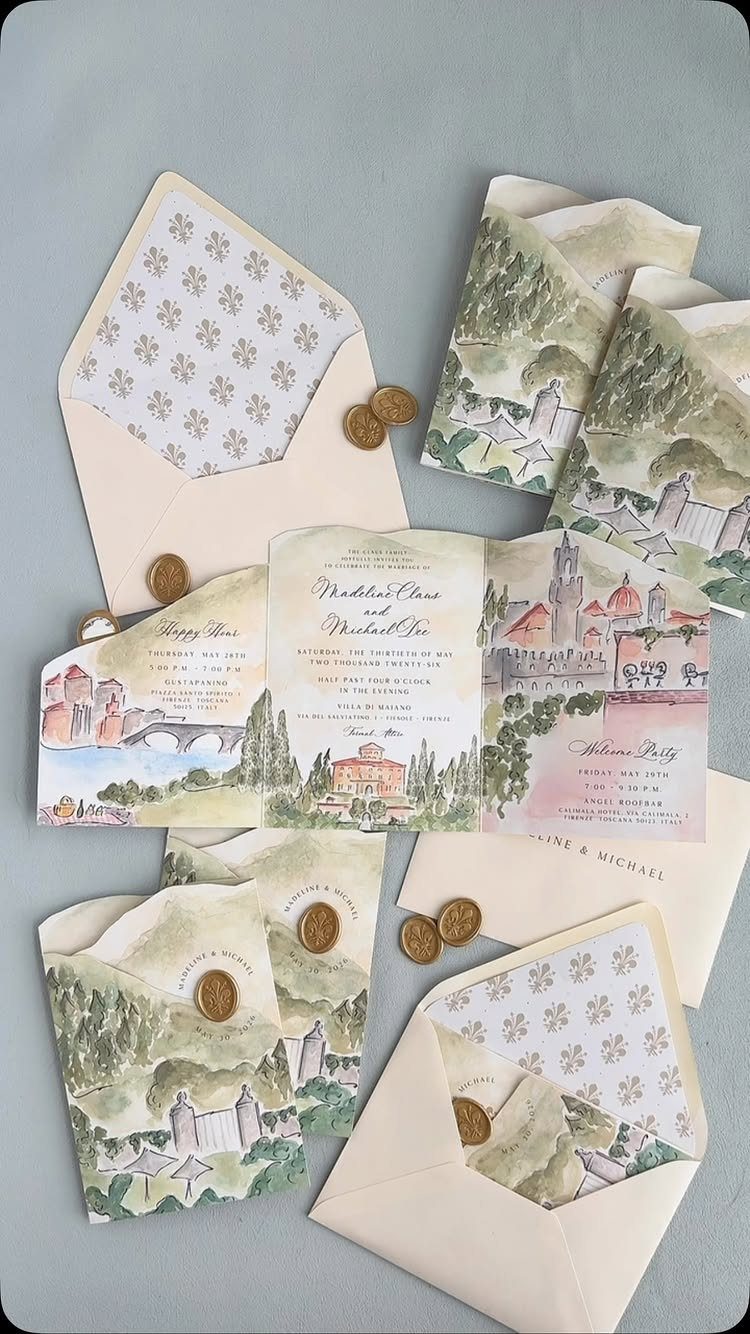
Watercolor drawings of the venue turn an invitation into a small keepsake, and guests tend to keep the ones that show a place they are about to visit.
An illustrator can paint the building and landscape, then repeat the artwork on the envelope liner and a welcome party card.
Ask for one painting that can be cropped differently across the suite, so you pay for the art once. Custom work costs more than a template, so decide early whether it replaces another splurge.
3. Pop-Up Invitations
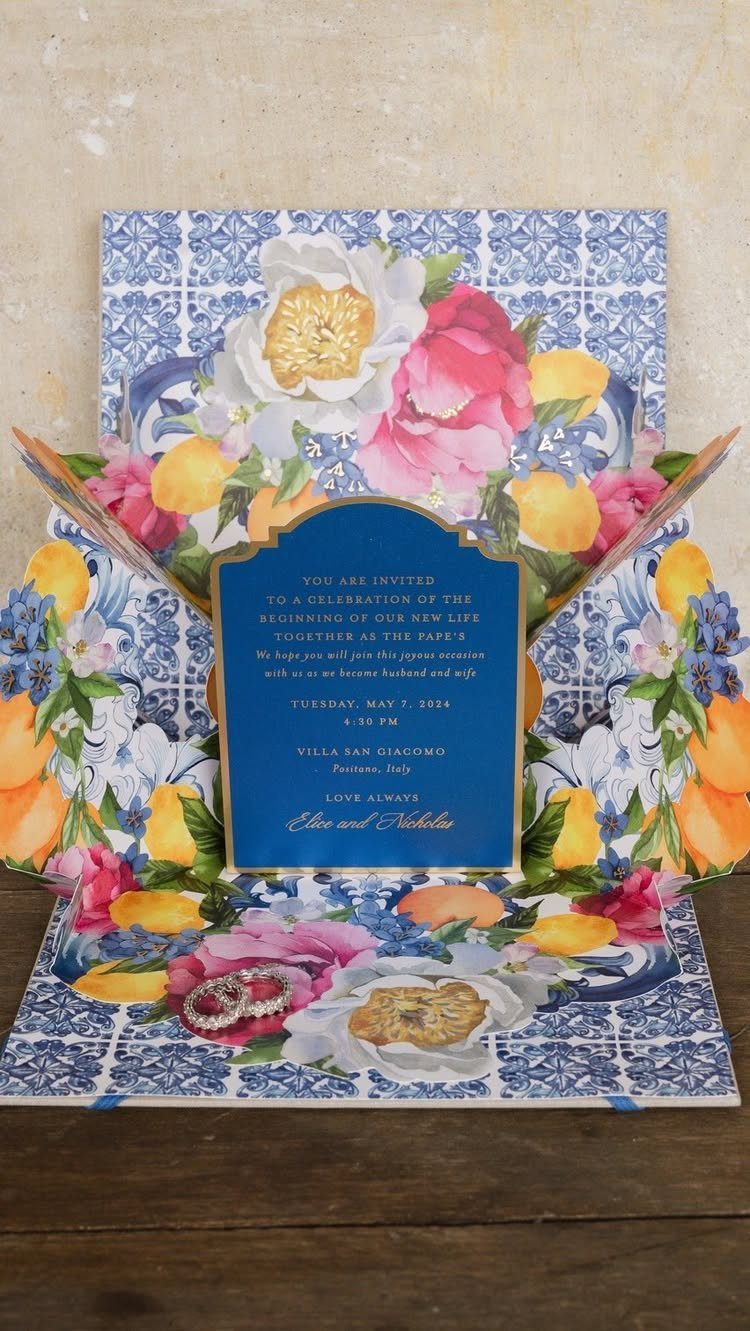
A pop-up card folds flat for mailing and rises in layers when opened, so ask the printer about envelope depth and extra postage before you commit to a design.
A destination wedding is the natural fit, since the artwork can borrow the look of the place itself.
Pop-ups cost more than flat cards to produce, and they are bulkier to mail. Before ordering a full run, ask for a sample and weigh it at the post office so you know the postage.
Keep the text short, because the 3D art is doing the talking.
4. Greenery Invitations
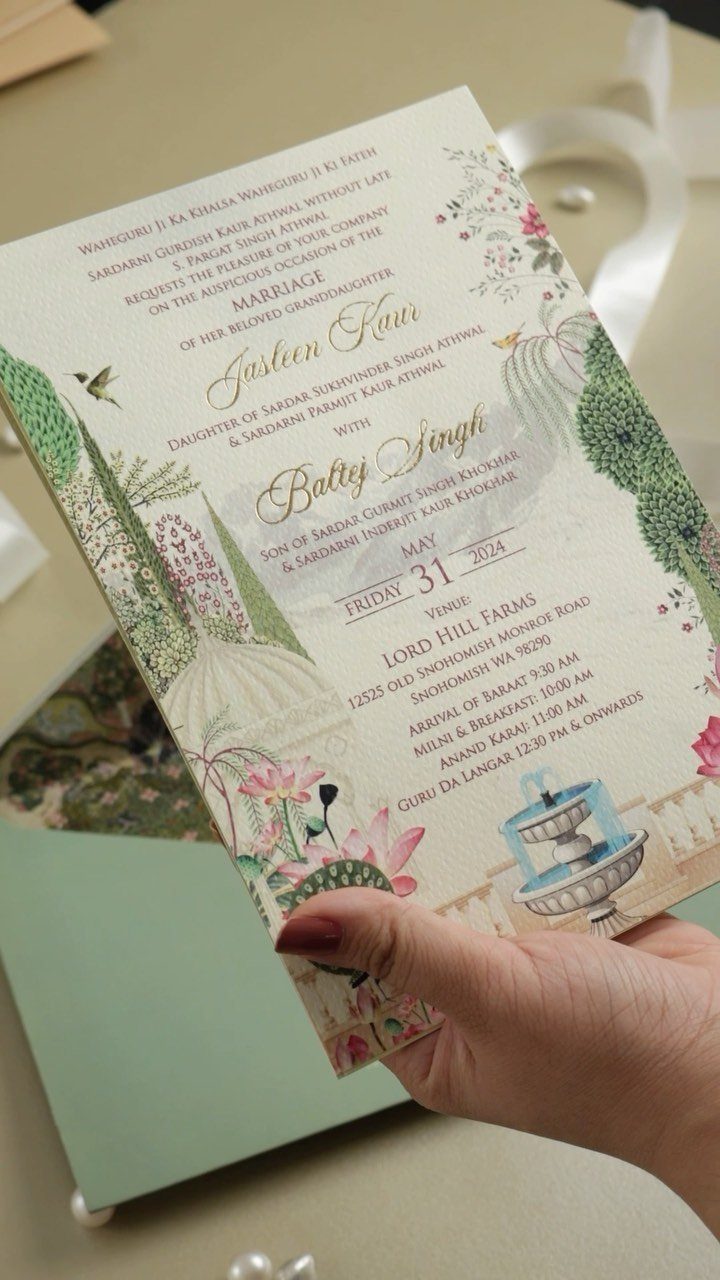
Leaves and flowers drawn around a card give it an outdoor feel before anyone arrives, which suits a farm venue well.
Mixing botanicals with architectural illustration, as this one does, lets the greenery frame the details instead of filling the page.
Keep the text on a plain, light area of the card so the names and date stay readable. Pick the greens first, then match the ink to them.
I would choose illustrated greenery over a photo of foliage, since the line work prints crisply.
5. Die-Cut Wedding Invitations
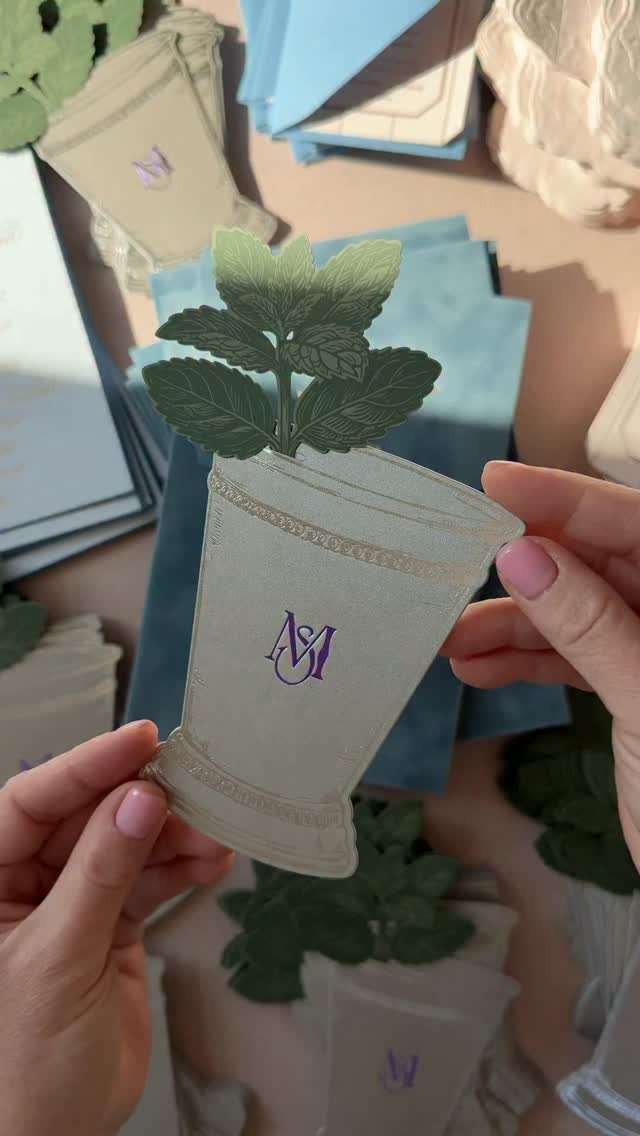
A die-cut card is cut into a shape, so the invitation itself hints at the party: a cocktail glass for a cocktail-themed celebration, say. Add a monogram and a few painted leaves and the shape does most of the work.
Pick a simple outline.
Thin stems and tight curves are harder to cut and can bend in the mail. Custom dies usually add to the cost, so a single shape on the main card is the budget-friendly choice.
6. Fabric Invitations
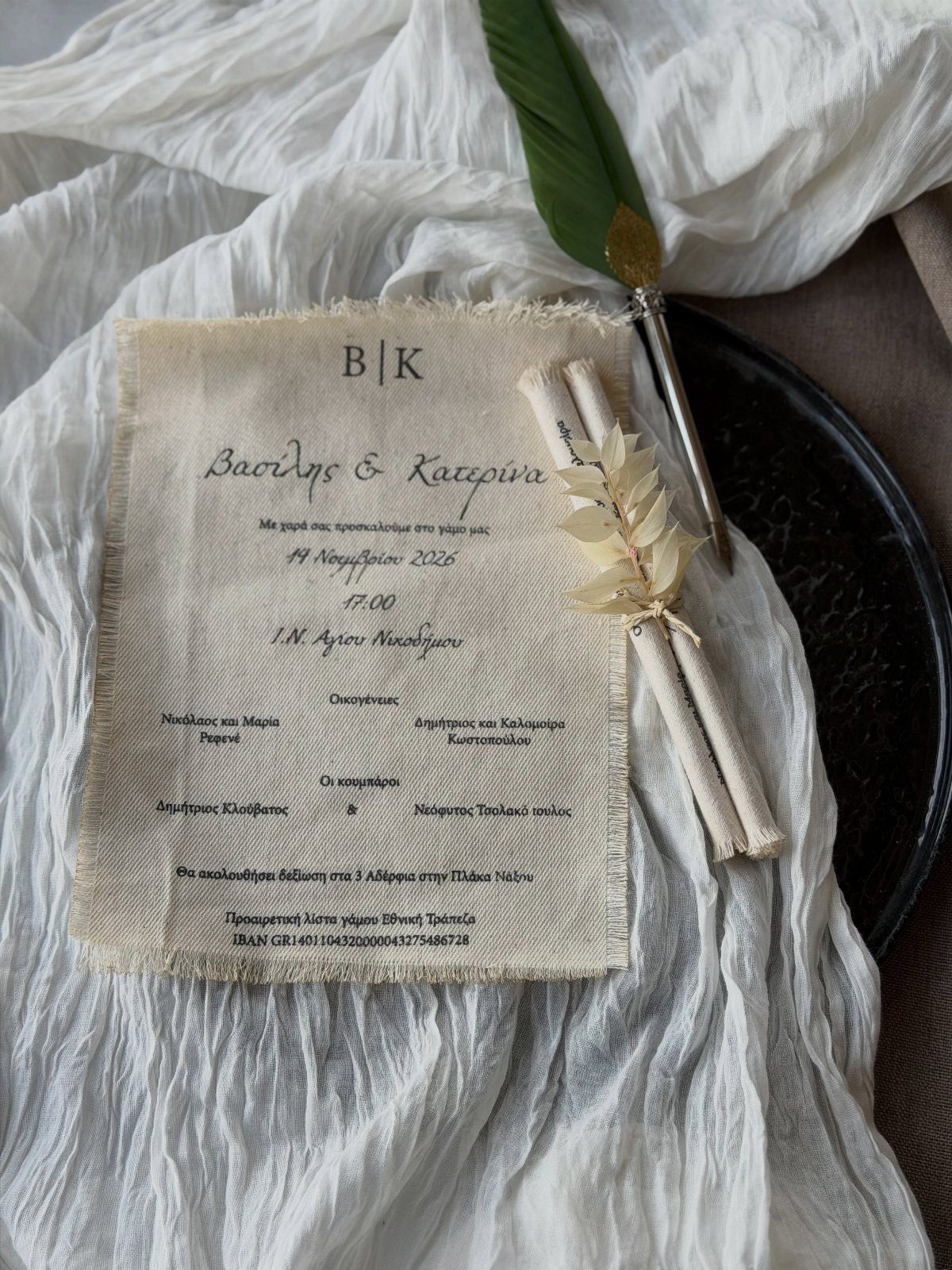
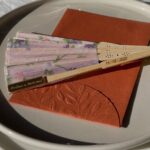
Printing on linen in place of paper gives guests something they can feel before they read a word. Rolled into scrolls and tied, it reads as a keepsake, and the cloth takes any language, including Greek, as easily as English.
Fabric costs more than cardstock and frays at cut edges, so ask the printer how the edges are finished. Test one sample for ink clarity on the weave before you order the full run.
7. Creative Fold Wedding Invitations
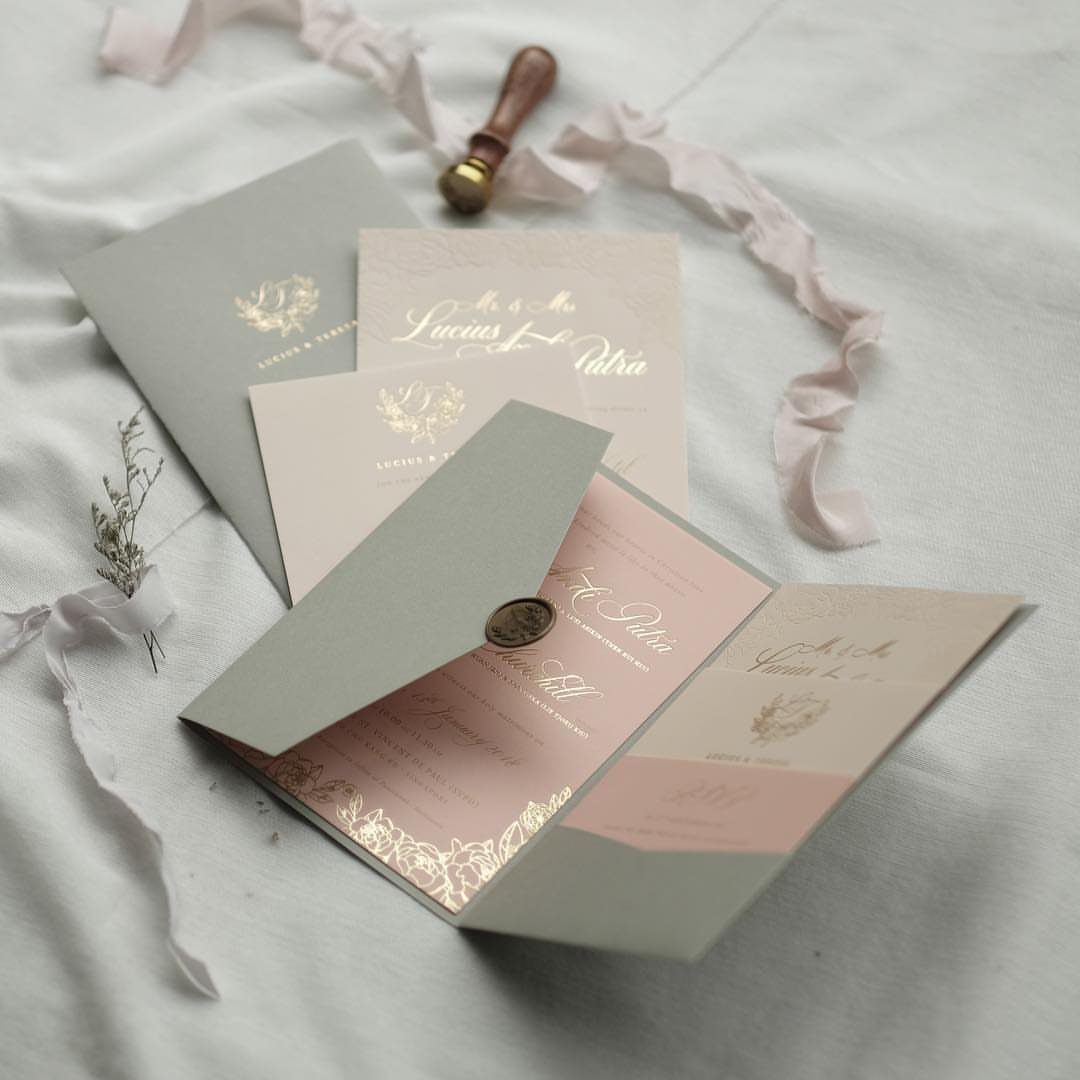
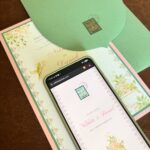
Sage green and blush pink with gold foil already read as soft; an unusual fold adds surprise before anyone reads a word. A wax seal and ribbon can hold the fold shut, so the closure is part of the design.
Ask the printer for a blank folded sample first. Odd folds can need a custom envelope, and that can raise both printing and postage costs.
I would pick one unusual fold and keep the rest of the suite plain.
8. Credit Card Wedding Invitation
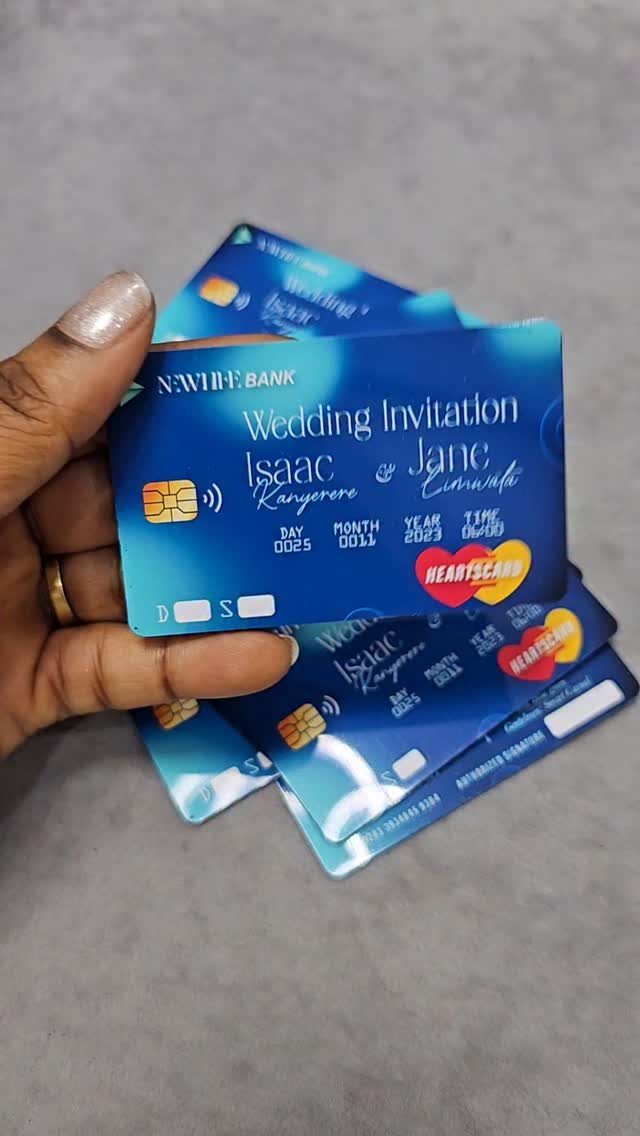
A blue plastic card cut to credit card size, with a fake bank name and the couple’s names where a cardholder’s would go, makes guests smile before they read the date.
The joke lands best with a couple who have a playful streak.
Keep the wording tight so the wedding details stay readable on a small surface. Plastic costs more than paper, so this suits a short guest list better than a large one.
Order a sample and check that the print is sharp.
9. Pearl and Crystal Framed Invitation
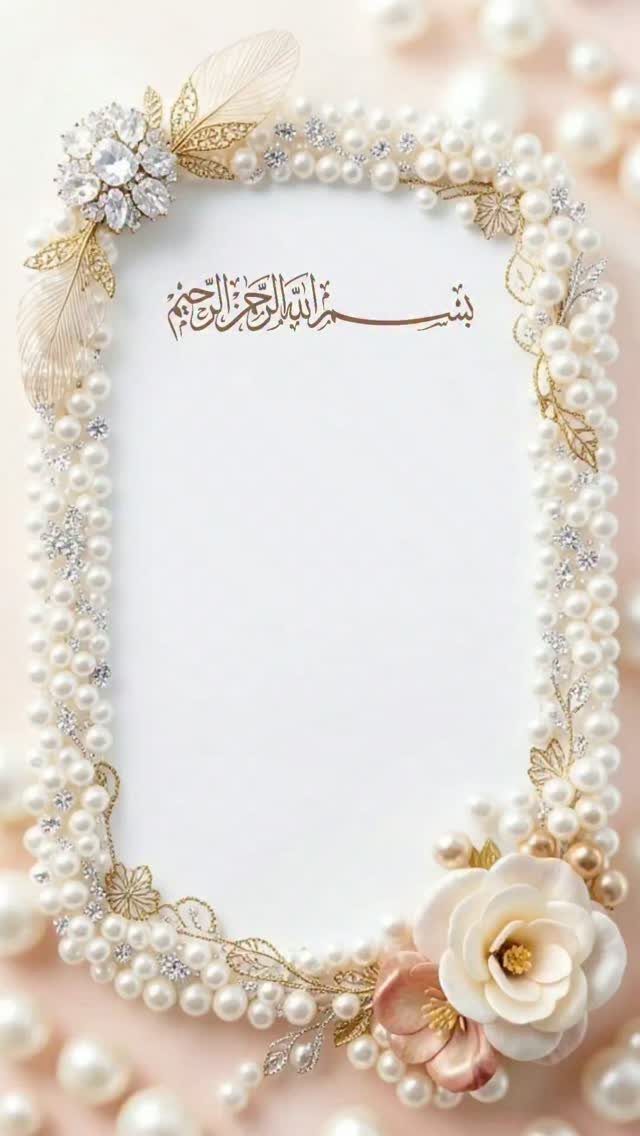
Pearls, crystals and gold filigree around a white card turn the invitation into an object guests will want to hold.
Keep the printed text simple, since the frame already carries the glamour, and the same approach works for Arabic calligraphy or any other script.
This is a splurge. Dimensional trim is heavier and pricier than a flat print, so frame the main card only, not every insert.
Test the weight at the post office before ordering, and consider a padded or boxed mailer.
10. Belly Band Envelope Closure
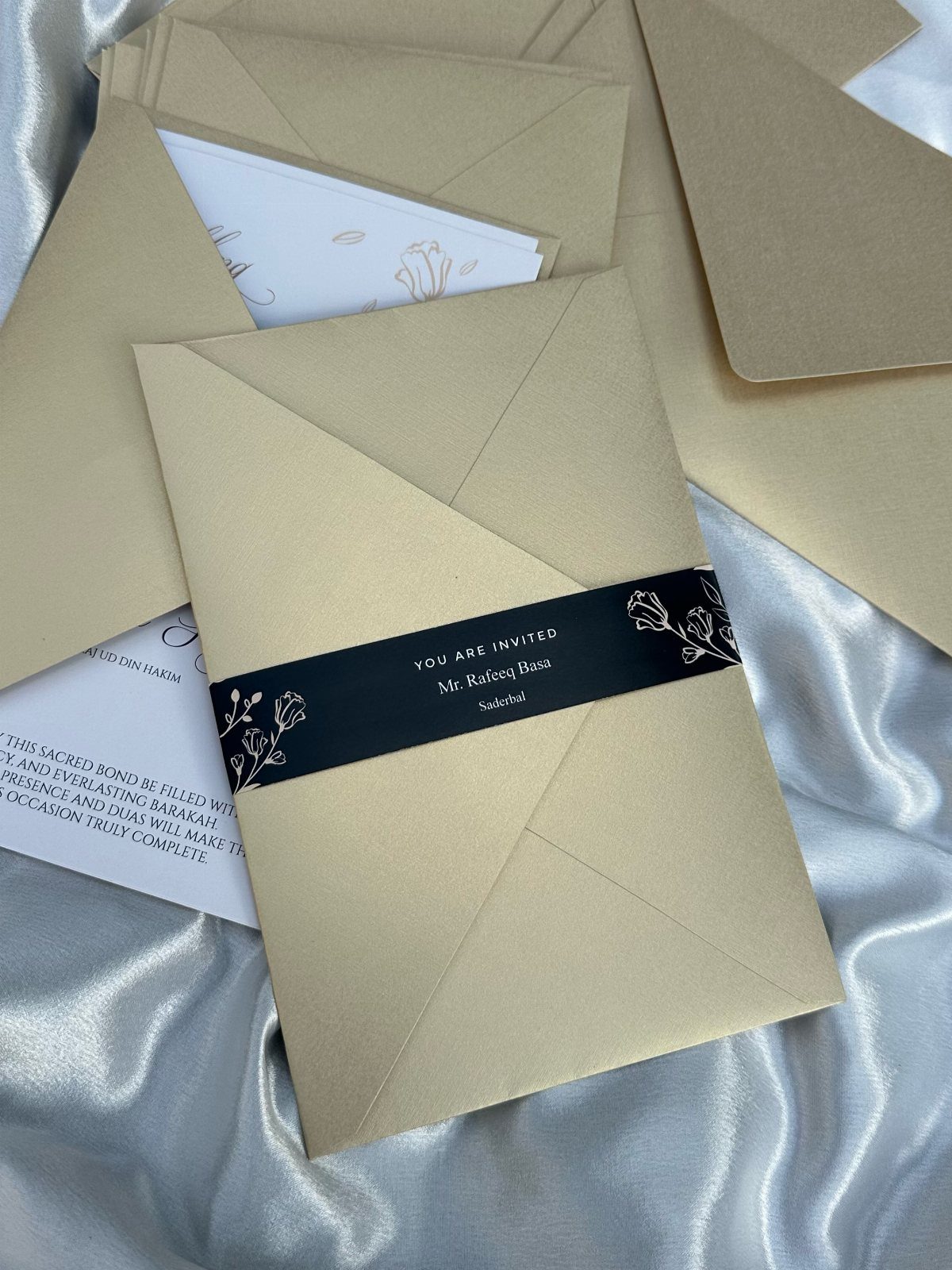
A printed paper band wrapped around the envelope to hold it closed lets the band say "You Are Invited" while the envelope itself stays clean. Black paper with floral art gives strong contrast against the tan.
It is a budget-friendly way to dress a plain card. Print the band as its own small piece, so you can change its color without reprinting the whole suite.
I would pick a band wide enough to carry a guest’s name, which also saves addressing the envelope.
11. Floral Invitations
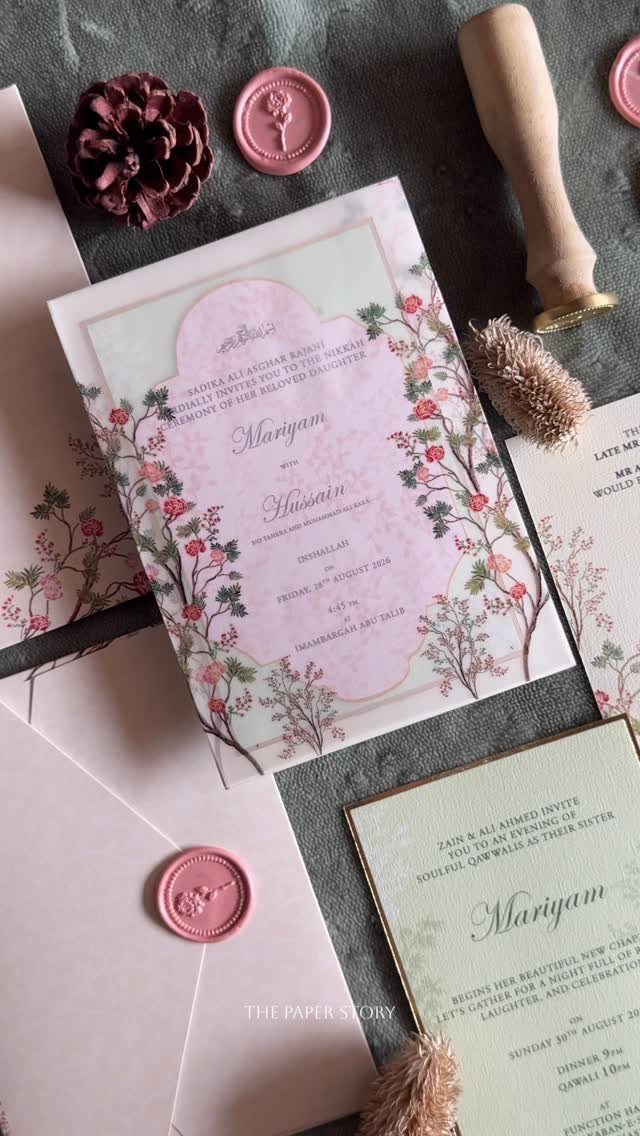
Flowers printed as a border, in pink here, frame the names and details without crowding them. A wax seal on the envelope adds a finishing touch, and the look has stayed in style for a long time.
Keep the floral art around the edges and leave the center open for text. Match the border color to your palette so the suite looks planned.
Wax seals take time, so for a large guest list, consider a sticker version.
12. Classic Wedding Invitations
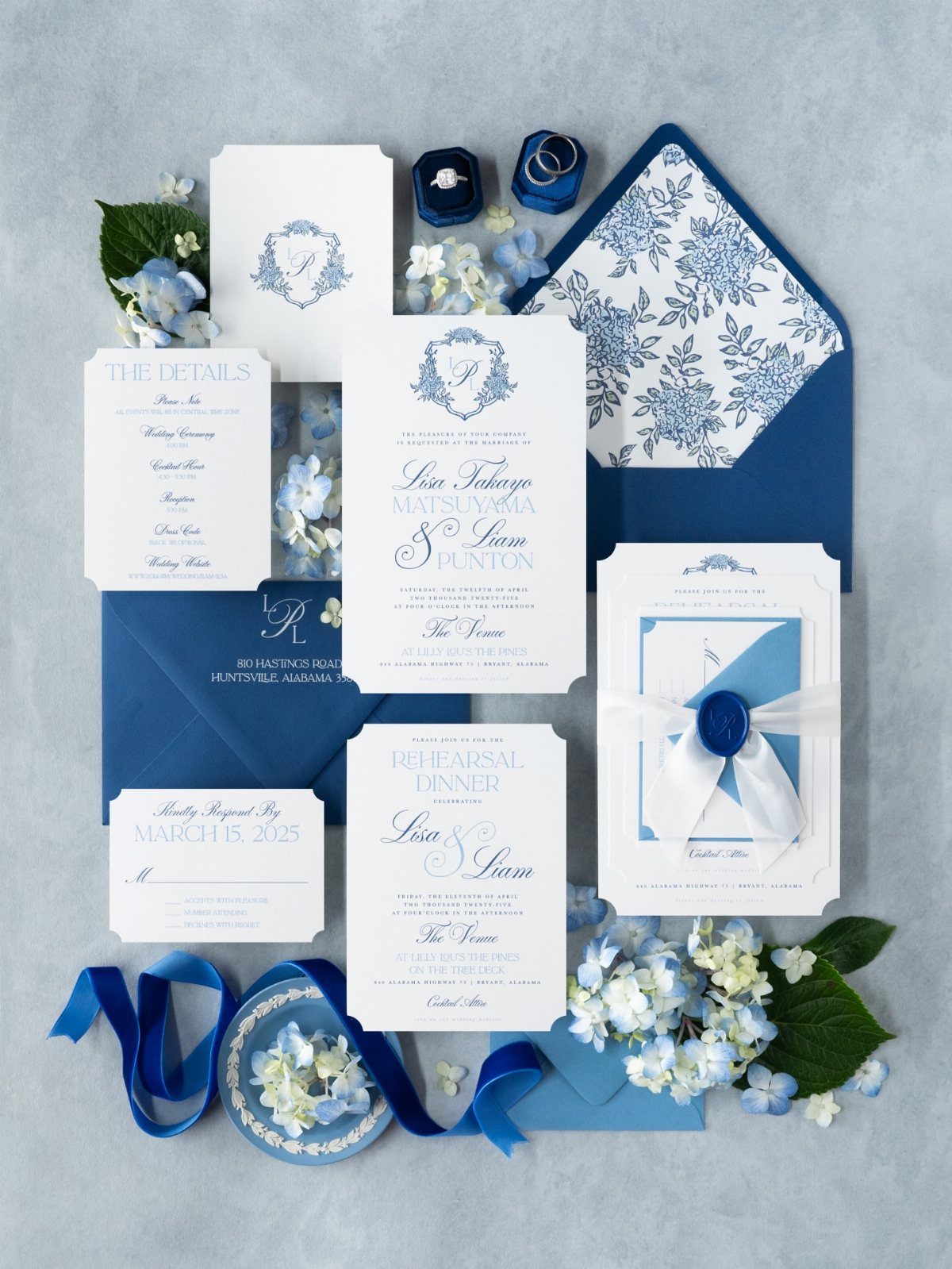
Classic suites last because they stay restrained: one ink color in calligraphy on white or ivory cotton stock, a matching details card, and an envelope in a deeper shade like navy to give the set some contrast.
One-color printing keeps the cost down, since each added ink or foil raises the price, and a navy envelope adds contrast without adding a printing step.
Bundle extra pieces like a rehearsal dinner card into one order; printers often price a full suite better than single items.
I would choose one script for the names and a plain serif for the details, so the calligraphy stays the star.
13. Wedding Invitations with Monograms
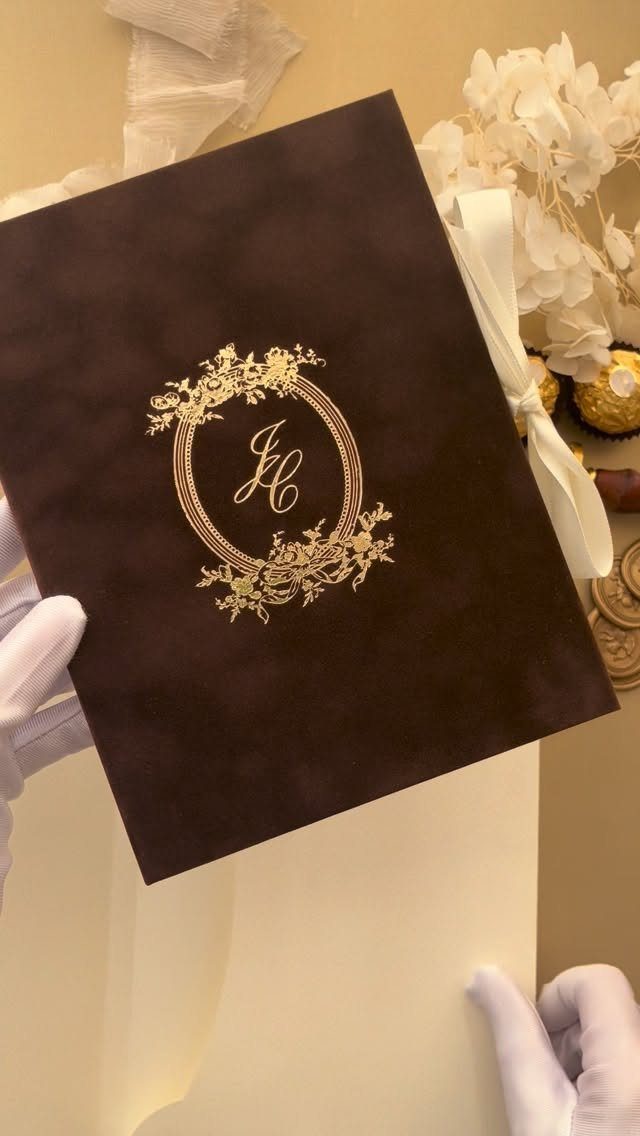
Your 2 initials, drawn once as a crest, can appear on every piece of the suite: the invitation folder, the details card, the envelope liner. Repeating one mark is what makes separate pieces look like a set.
Gold foil on dark brown gives strong contrast, and a monogram crest is a small area to foil, so the cost stays modest.
Foil costs more than plain ink, so limit it to the monogram and print the rest in a single color.
I would keep the lettering inside the crest simple enough to read at a glance.
14. Bold Typography Wedding Invitations
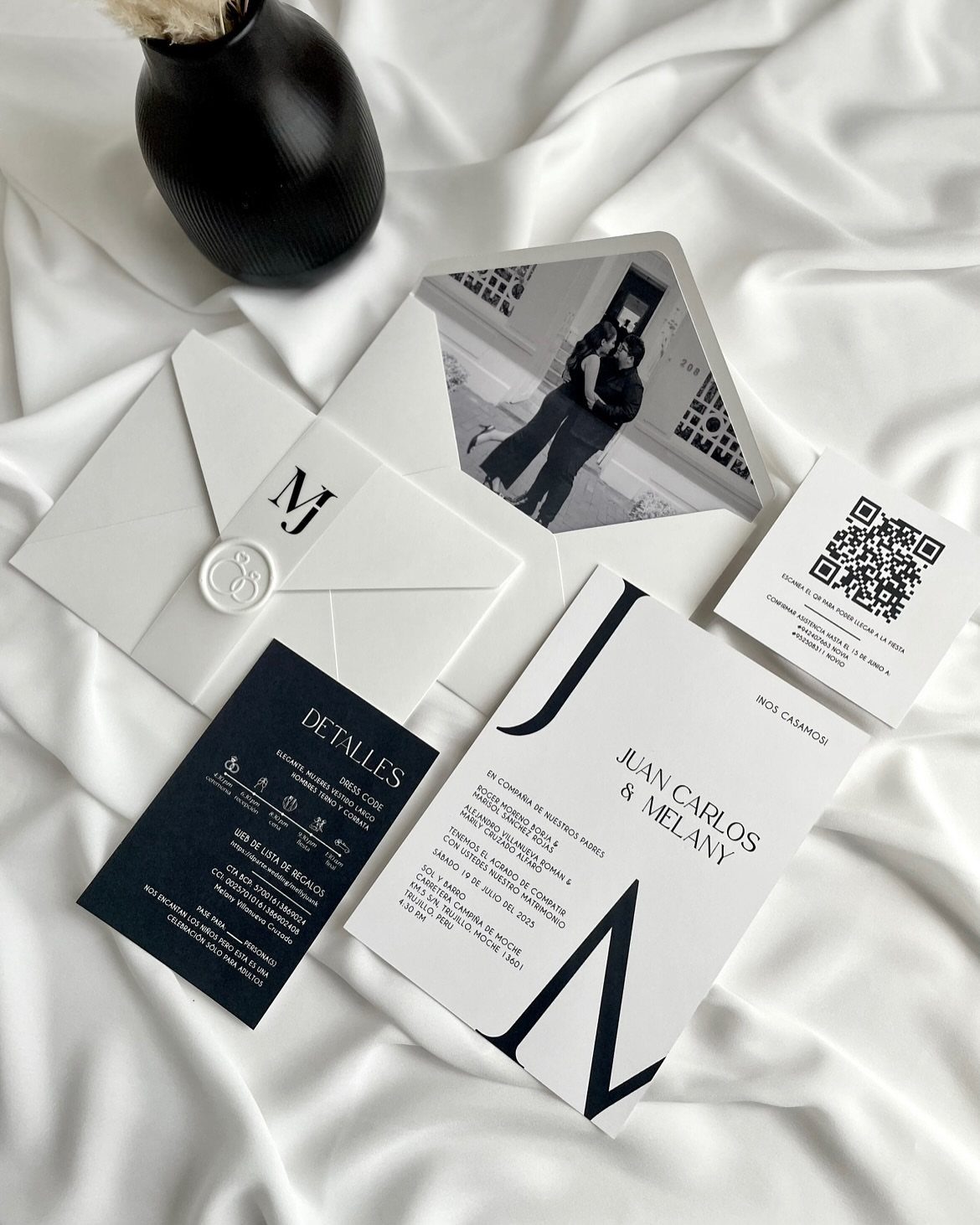
Heavy black letters set the names large, and that alone can carry a suite. Pair them with a small monogram and a clean black and white photo, and the type does the decorating.
Pair one bold typeface for the names with a quiet one for the details, and guests will find the date at a glance. Keep the colors to black and white and the whole set stays cohesive.
A QR code card is a smart extra for a guest list that spans several languages or countries. Before ordering the full run, print a test copy at actual size and read it from arm’s length.
15. Vintage-inspired Wedding Invitations
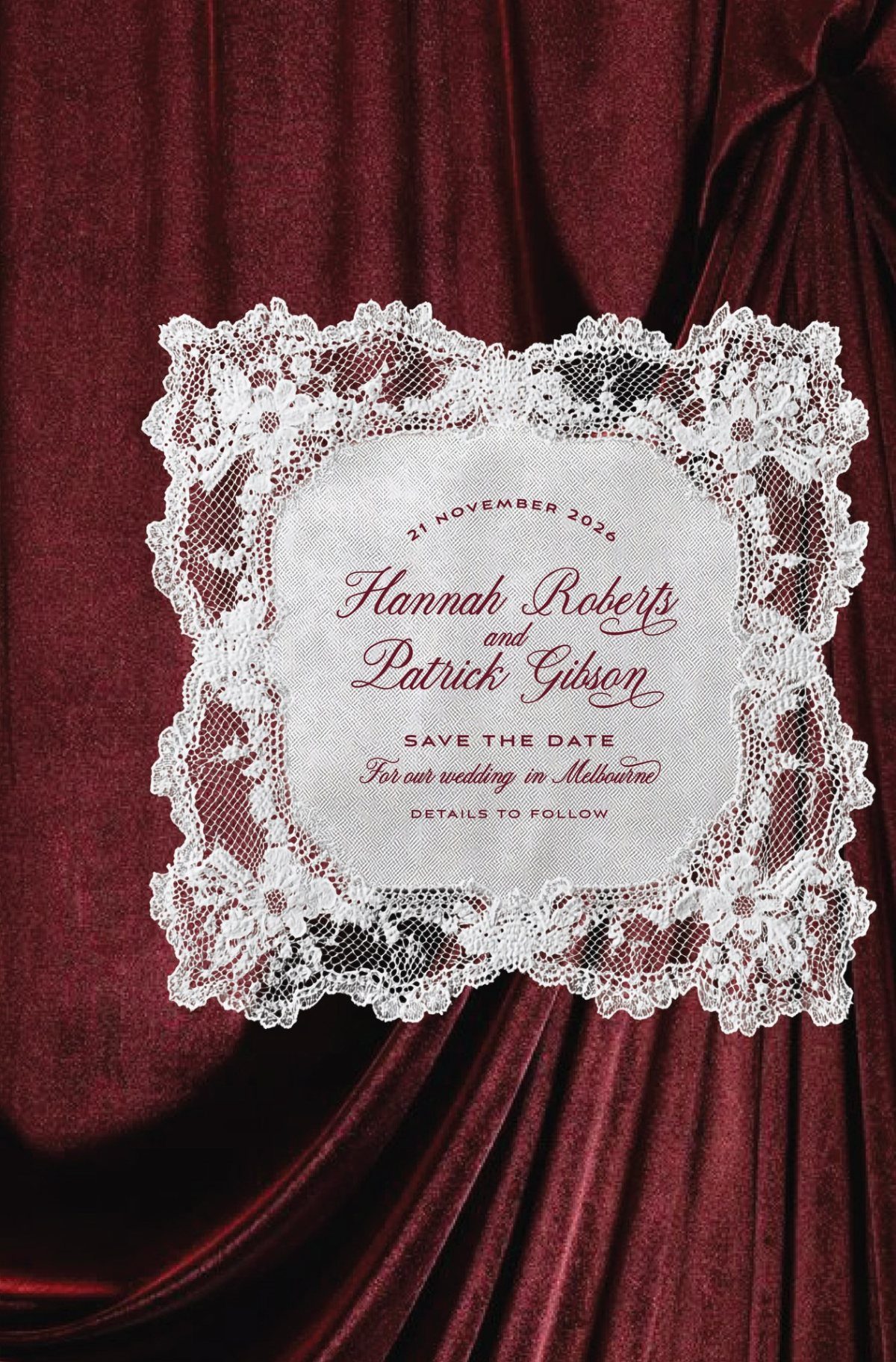
A lace border gives a card an heirloom feel, and a deep burgundy backdrop in photos or on the envelope makes the white pop.
Vintage styling is mostly restraint: a soft white card, fine detail at the edges, and a short block of text.
Lace-style borders can be printed or cut, and cut work costs more. For a tight budget, I would print the pattern and spend on good paper.
Check that the names and date stay readable against the pattern.
16. Letterpress Invitations
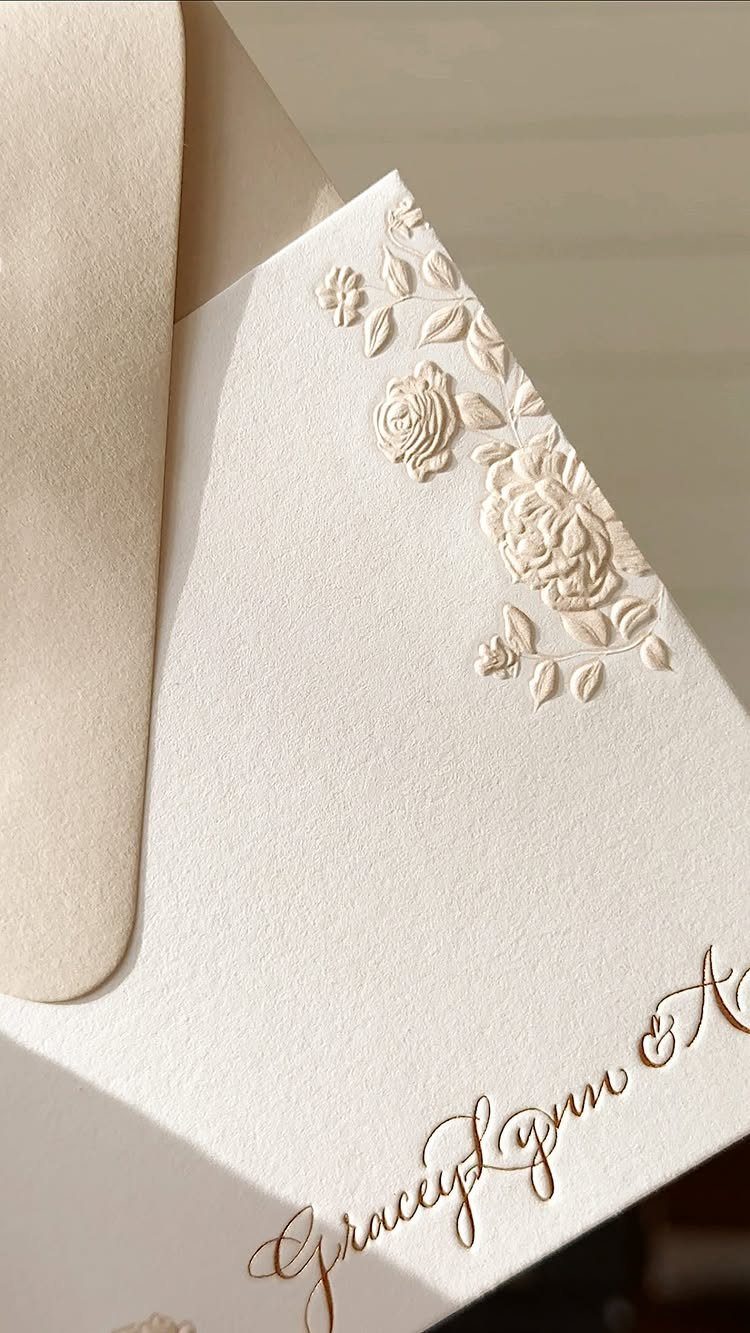
Letterpress presses the design into thick paper, leaving a texture you can feel with a fingertip.
Choose cotton stock, since soft, thick paper takes the impression well.
Keep the artwork simple, because fine lines and tiny type can fill in. Every added ink or foil raises the price, so pick one accent color and let the texture carry the rest.
Request a printed sample first, because the depth of the press is much easier to judge by touch than on a screen.
When to Send Invitations
Count backward from your caterer’s final headcount deadline, not from the wedding date. Guests need time to answer, and you need a few weeks after that to chase the stragglers.
For a local wedding, mail invitations six to eight weeks out. A destination wedding needs far more lead time: four to six months, so guests can book flights and request time off.
Save the dates should go out well before the invitations, several months ahead. They matter most if the date falls in a busy season or many guests must travel.
If you are on the fence between two mailing dates, pick the earlier one. An early invitation costs nothing extra, and a late one can cost you guests.
RSVP Importance
An RSVP card is not strictly required, but I would include one. It gives you a firm headcount, and seating, catering and every other logistics decision hang on that number.
Guests also answer faster when the reply is easy. A card with a return envelope means nobody has to hunt for paper or an address.
Set the reply-by date a few weeks before your caterer’s deadline, so you have time to follow up with anyone who stays silent.
Budget for the return postage, since you are paying for a stamp on every envelope. If that adds up too fast, a reply by website is the cheaper route, though older relatives may prefer paper.
Cost of Invitations
Printed invitations average around $500 for a full wedding, and 100 of them can run about $160 if you keep the design simple. Both figures swing with inserts, envelopes, RSVP cards and printing method.
Digital invitations can cut that total, and the final price depends on your guest count, how much you customize and which features you add. They also leave no paper behind, if that matters to you.
My advice is to price the complete suite before you fall for a design. Add the reply cards, extra envelopes and postage to the quote, then compare that real total with your paper budget.
If the number runs high, go digital for casual events and print only the main invitation.
Frequently Asked Questions
What should you include in a wedding invitation?
Put the couple’s names, the date, the city and the venue address on the card.
Add a dress code if you have one, and whether children are invited, to head off the questions guests would otherwise text you. If the festivities span several locations, list each address clearly and say whether transportation is provided.
How many wedding invitations should I order?
Order about 10–15% more than your guest count suggests.
Send one invitation per household or couple, and one per individual guest, then count from that. The extras cover addressing mistakes, late additions and keepsakes.
How can I make wedding invitations more creative on a budget?
Pick one standout feature and keep everything else plain.
A single die-cut shape on the main card or one unusual fold also works. Each added ink, foil or custom piece raises the price, so limit them to one.