Which wedding invite card fits depends on your guest list, because the cost of every piece multiplies by the number of households you mail.
The ideas here run from a digital invitation with free postage to a velvet folder, with gold foil, embossed borders, handwriting and wax seals in between.
A modest budget does best with one splurge on a single piece, such as gold foil on the main card or a wax seal on each envelope, while everything else gets printed plainly.
1. Digital Wedding Invitations
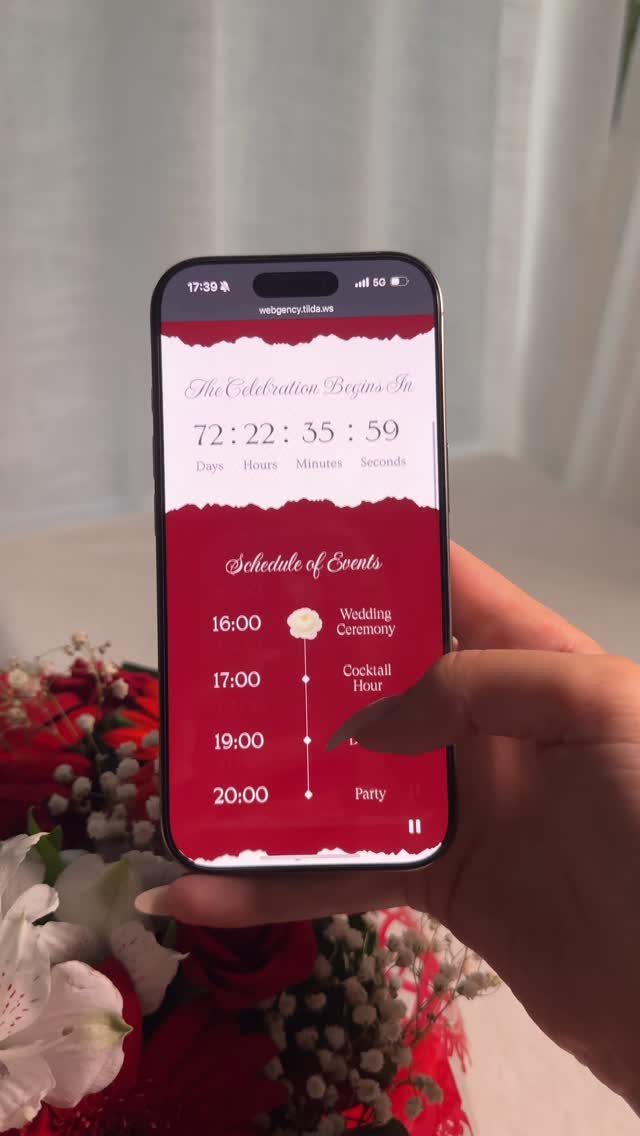
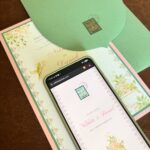
Edits are where a digital invitation earns its keep.
A typo in a printed run costs a reprint; online, you fix it in minutes. The designer behind this one offers unlimited edits, so ask any vendor about their revision limit before you pay.
A countdown timer and a schedule of events fit on a phone screen far better than on card stock, so a digital invitation can carry the day’s details without crowding anything.
Send it by text or email, and keep a short printed card for grandparents who won’t open a link.
Free postage is the real budget win.
2. Rustic Wedding Invitations
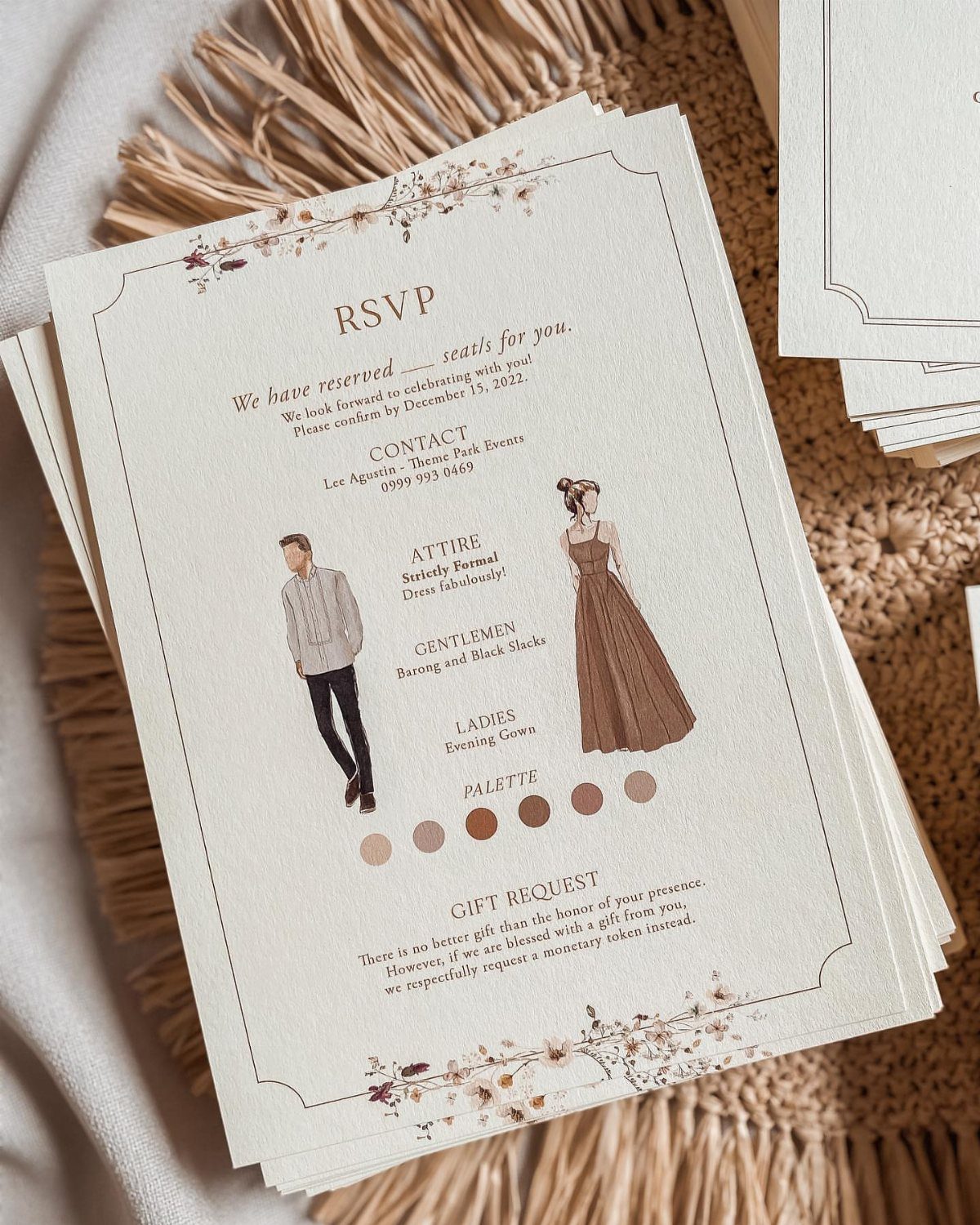
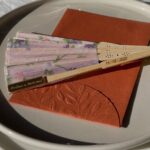
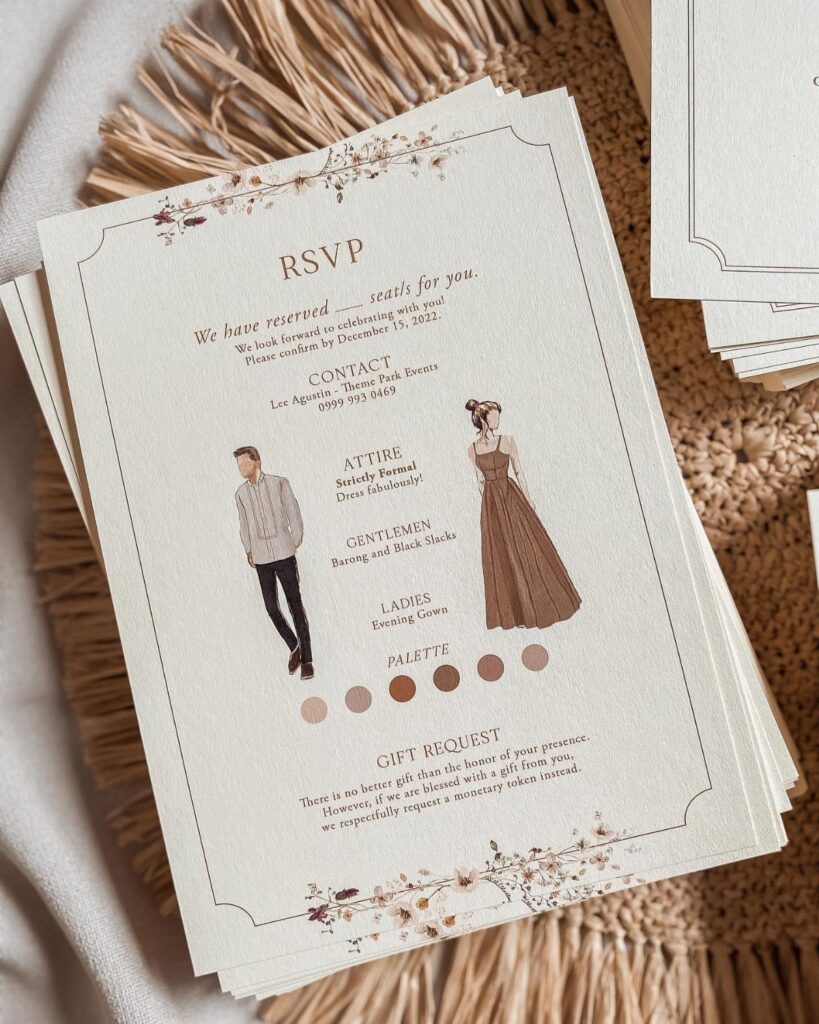
Attire notes, a color palette and a gift request fit on one RSVP card, which saves you a separate details insert.
Short text lets the texture of the paper do the talking, so say less and let the stock carry the mood. If money is limited, I would put the decoration on the RSVP card and leave the main invitation plain.
3. Save the Dates
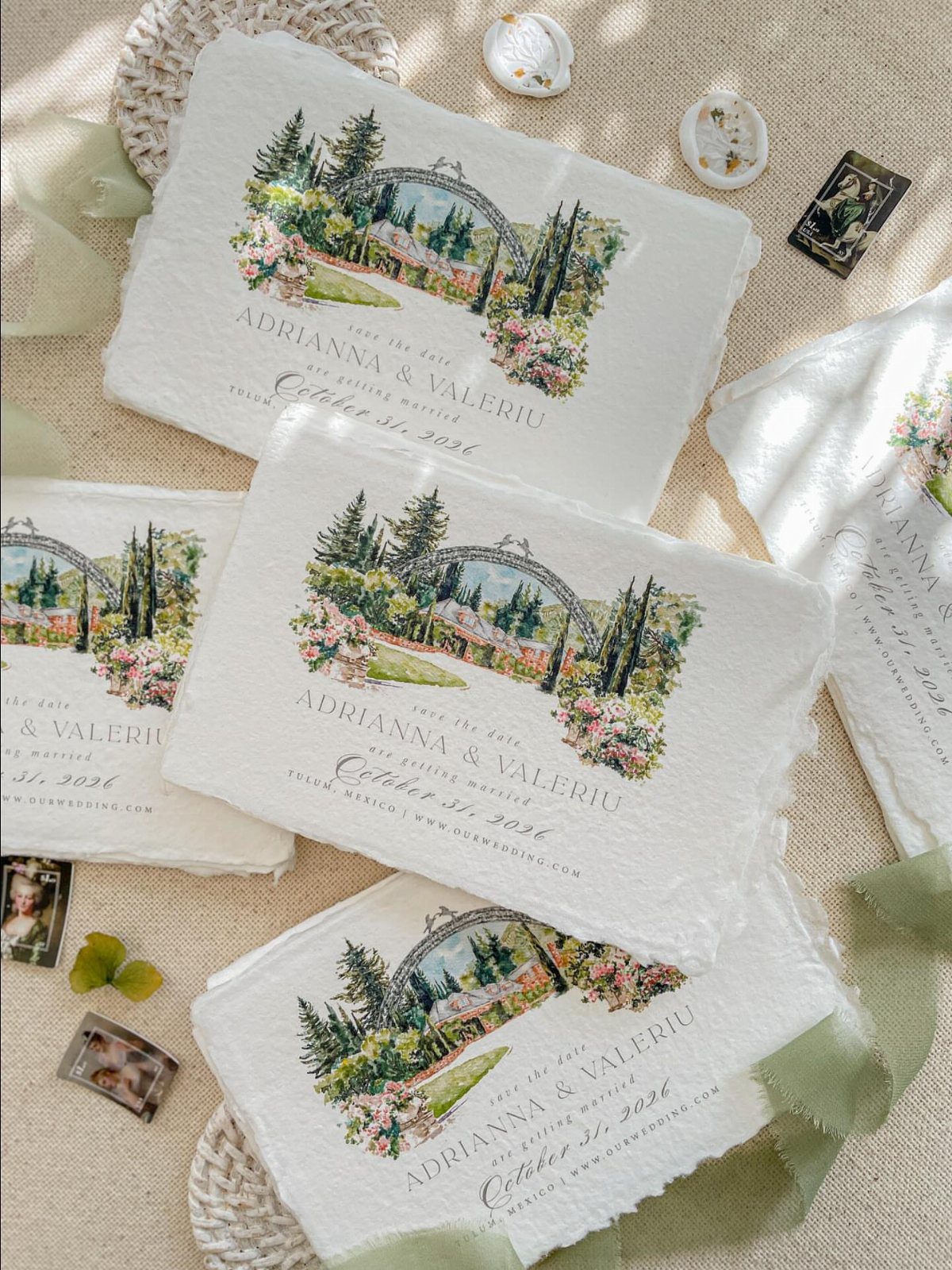
Mail save the dates before the invitations, and give them one job: who is getting married and when.
The date here, October 31, 2026, sits right in the middle of the card. Guests who see it early can book travel and time off.
Add the website address if you have one, since the invitation will carry the full details later.
4. Floral Wedding Invitations
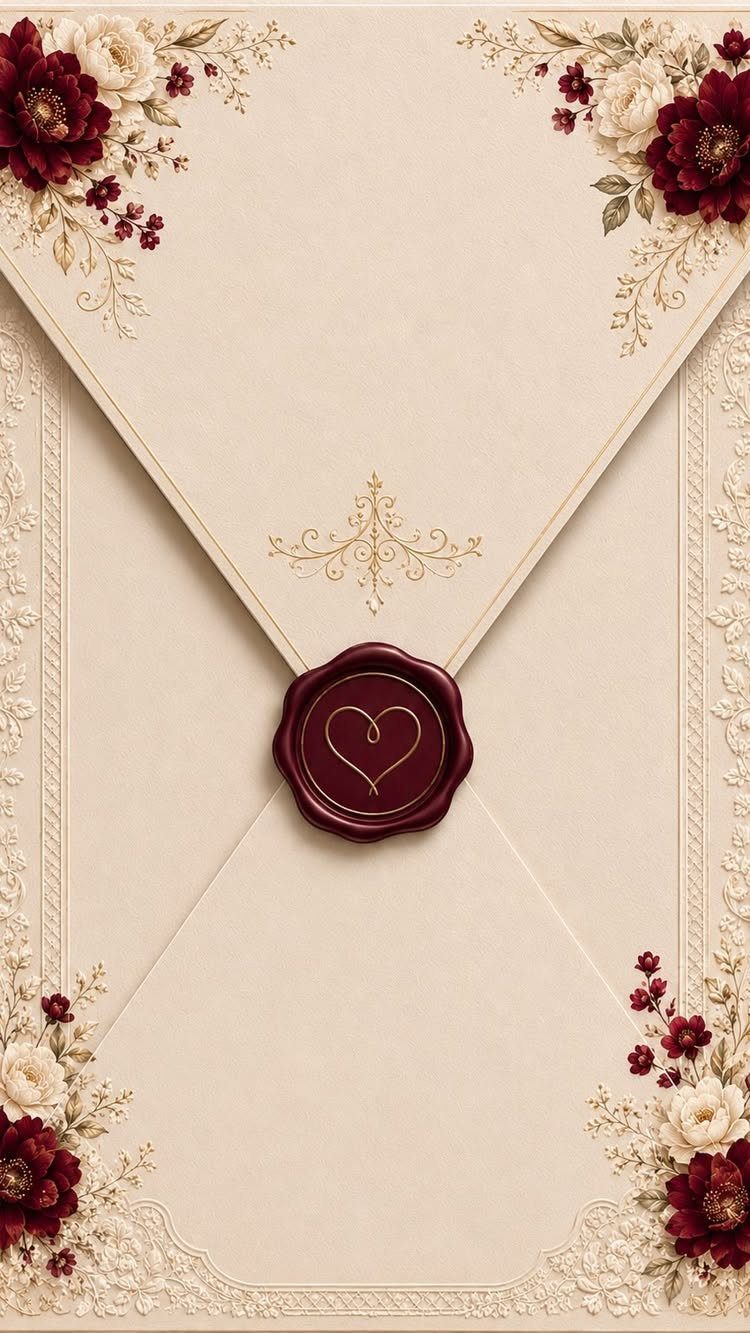
Florals in the corners leave the center of the envelope open for the address, which keeps the design from fighting with the writing.
Corner arrangements also scale well: the same artwork can repeat on the RSVP card and the menu, so the whole set matches without extra design fees.
5. Gold Foil Wedding Invitations
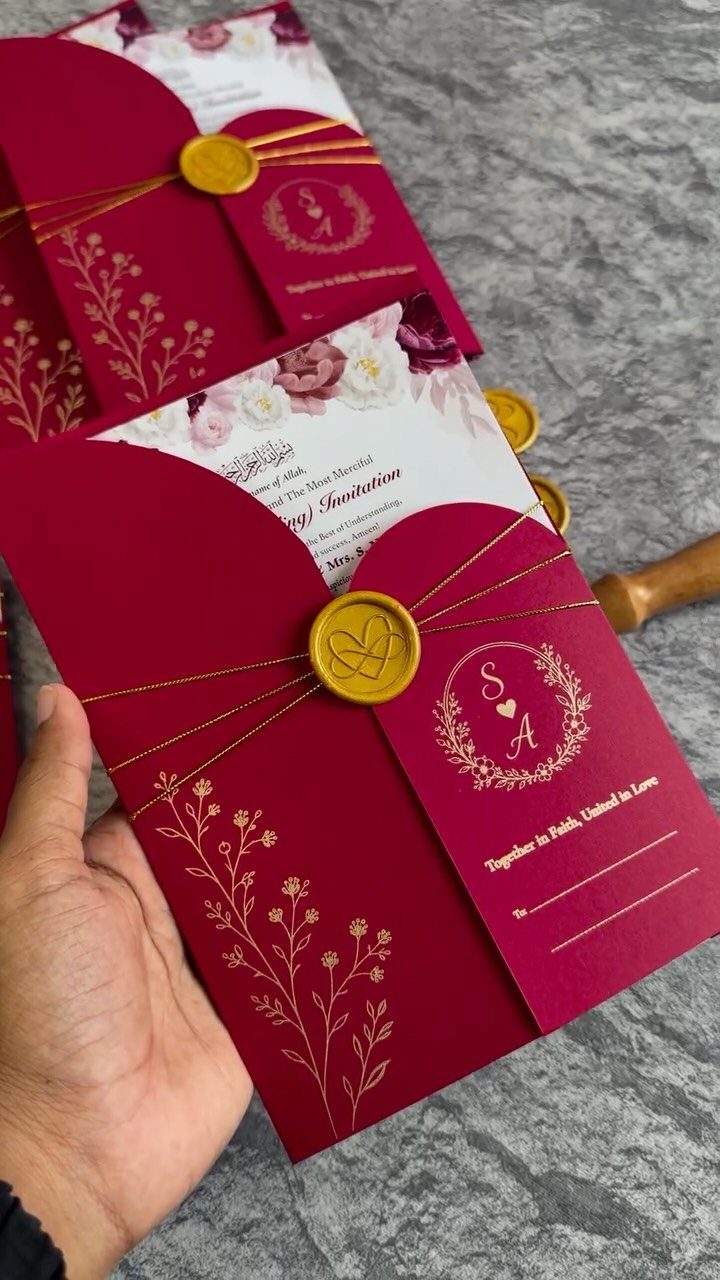
Gold foil on deep burgundy is the combination I would pick if I could afford only one splurge. Foil catches light, and the dark paper makes it read as rich rather than flashy.
Use it sparingly.
Foil on the floral pattern and the initials alone keeps the cost down, while the wording stays in plain ink. Printers usually charge more per color of foil, so ask for a quote with one foil color first.
6. Wedding Invitation Suites
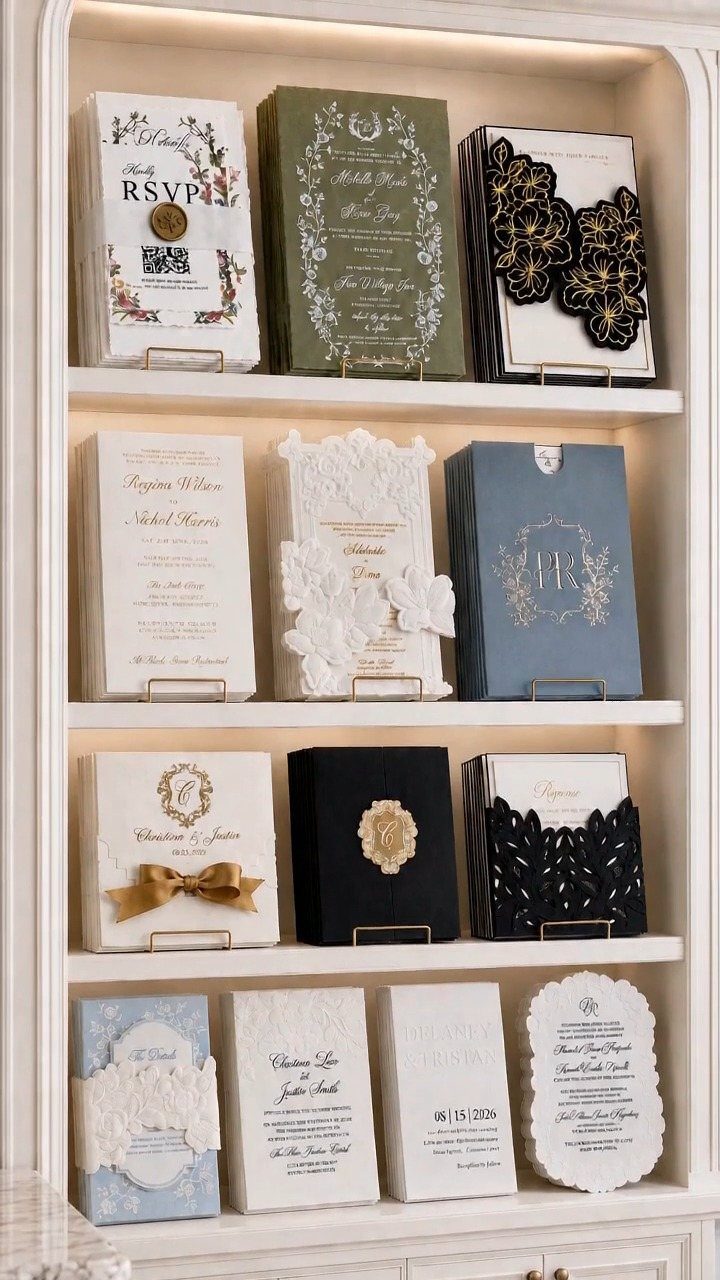
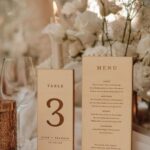
A suite means the invitation plus its companions: RSVP card, details card and envelope, all in one design. Laser-cut pieces add a layer of detail, though every extra piece adds cost.
On a budget, I would cut the suite to 3 items and move the details onto a website. Pick one color family and let the paper and cut shapes vary, so the set stays coordinated without everything matching exactly.
You can easily make them look and feel your own with custom elements like silhouette, paper thickness, color, and shimmer level. One stack of 100 invites will cost you under $250.
— Vogue
7. Cultural Wedding Invitations
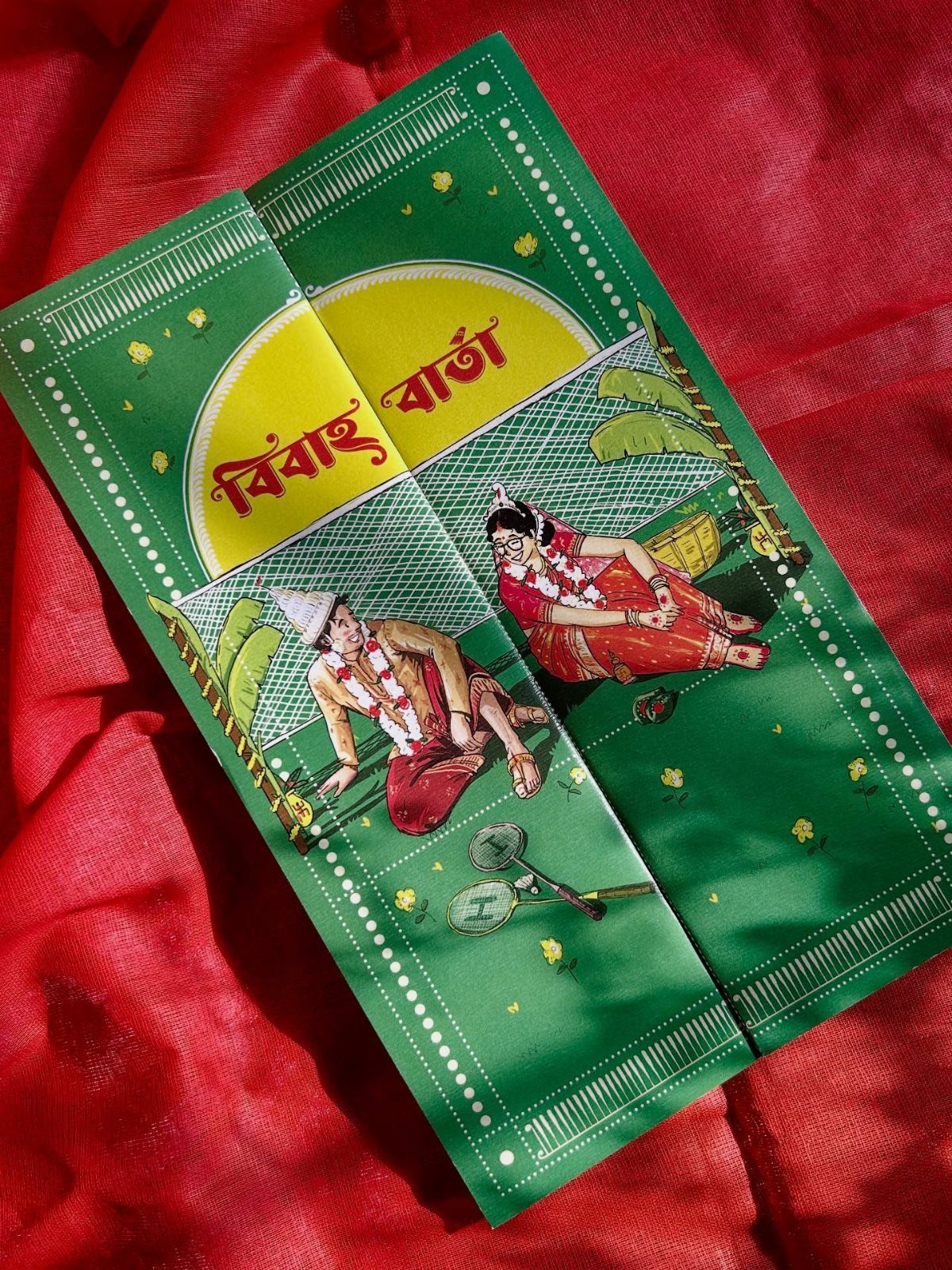
Writing the invitation in the language your families actually speak is the clearest cultural choice you can make. Bengali script, as on this green folded card, tells elders the day belongs to them too.
If guests read different languages, I would print one language on the front panel and the second inside the fold.
Have a fluent relative proofread every line before printing, since a wrong character is hard to spot unless you read the language.
8. Photo Wedding Invitations
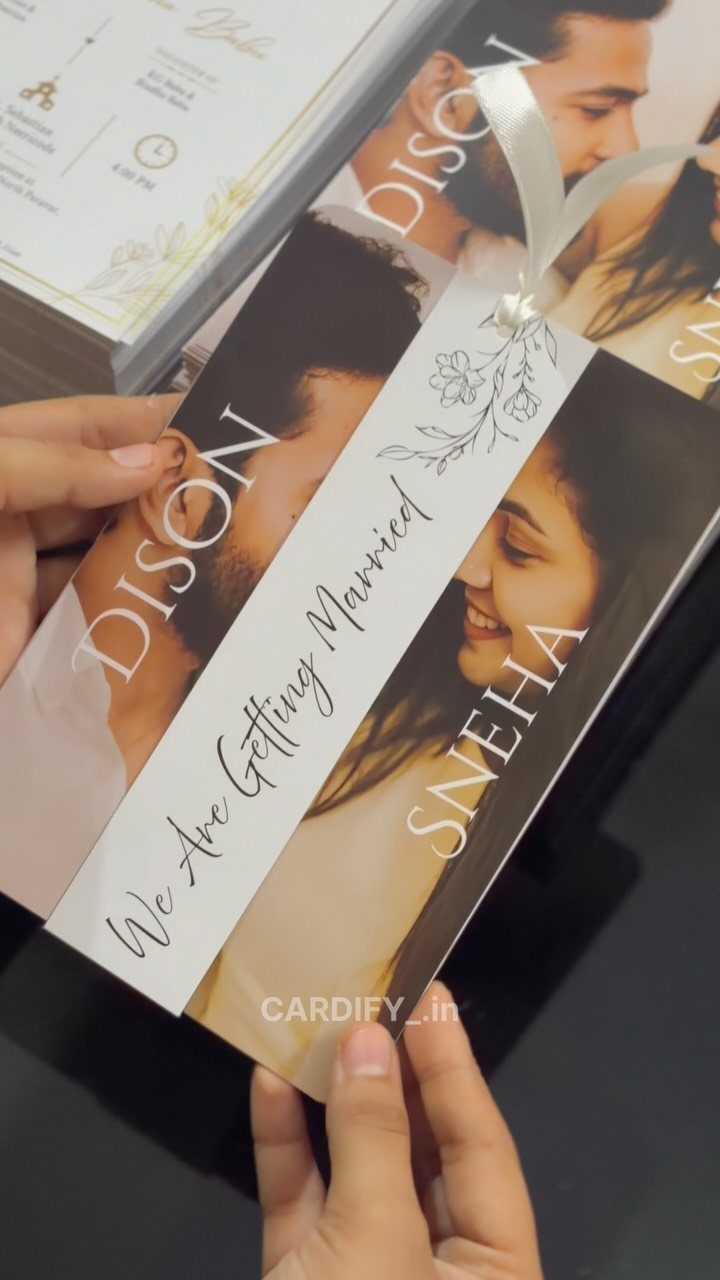
A tall, narrow card gives photos room to stack, so the couple’s faces sit above the names without crowding the text.
Gold lettering stays readable on a photo only if the area behind it is calm, so pick a picture with open sky, a soft wall or blurred greenery where the type will sit.
Pick a photo with plain background space where the words will go. Names and one line like "We Are Getting Married" are enough for this card, and the date and venue can go on a separate card.
9. Minimalist Wedding Invitations
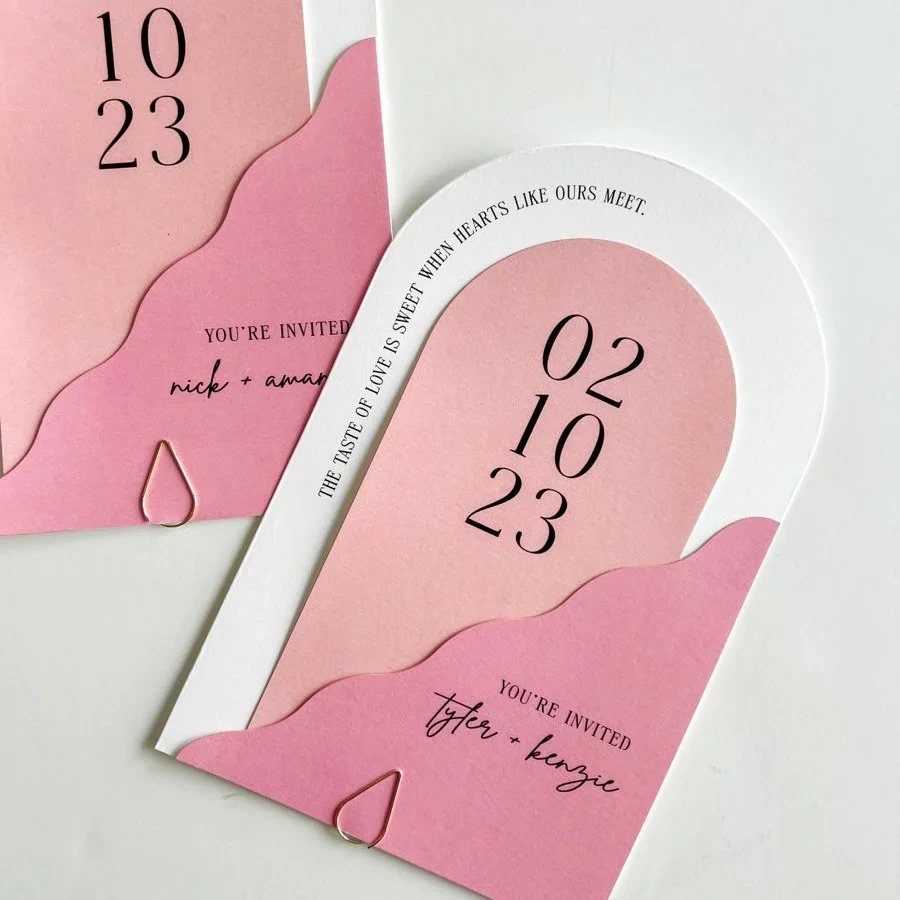
Arched edges and a pale pink handle the decorating, so the type can stay small and quiet. Names, a date and one short quote are enough.
Layered paper edges add depth without ink or foil, which is where I would spend a small budget. Choose one clean typeface and use it throughout; two fonts on a card this plain start to look like a mistake.
10. Handwritten Wedding Invitations
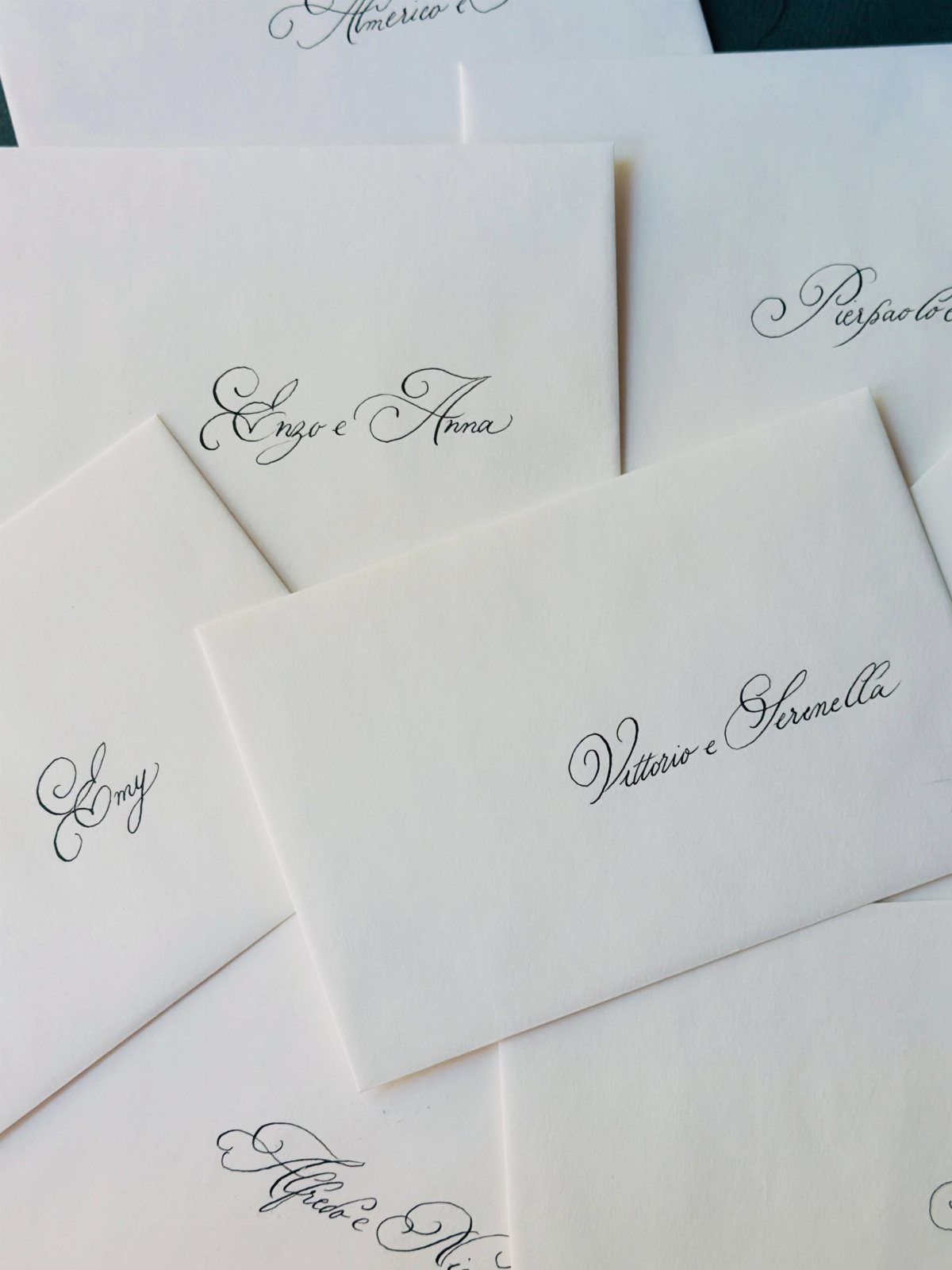
Calligraphy on the envelope costs less than calligraphy on every card, and it is the first thing guests see. Black ink on white envelopes is hard to beat for contrast and legibility.
Ask the calligrapher for a quote per envelope, then count your households, not your guests, since one envelope covers a couple or family. Order a few extra envelopes for mistakes.
11. Velvet Wedding Invitations
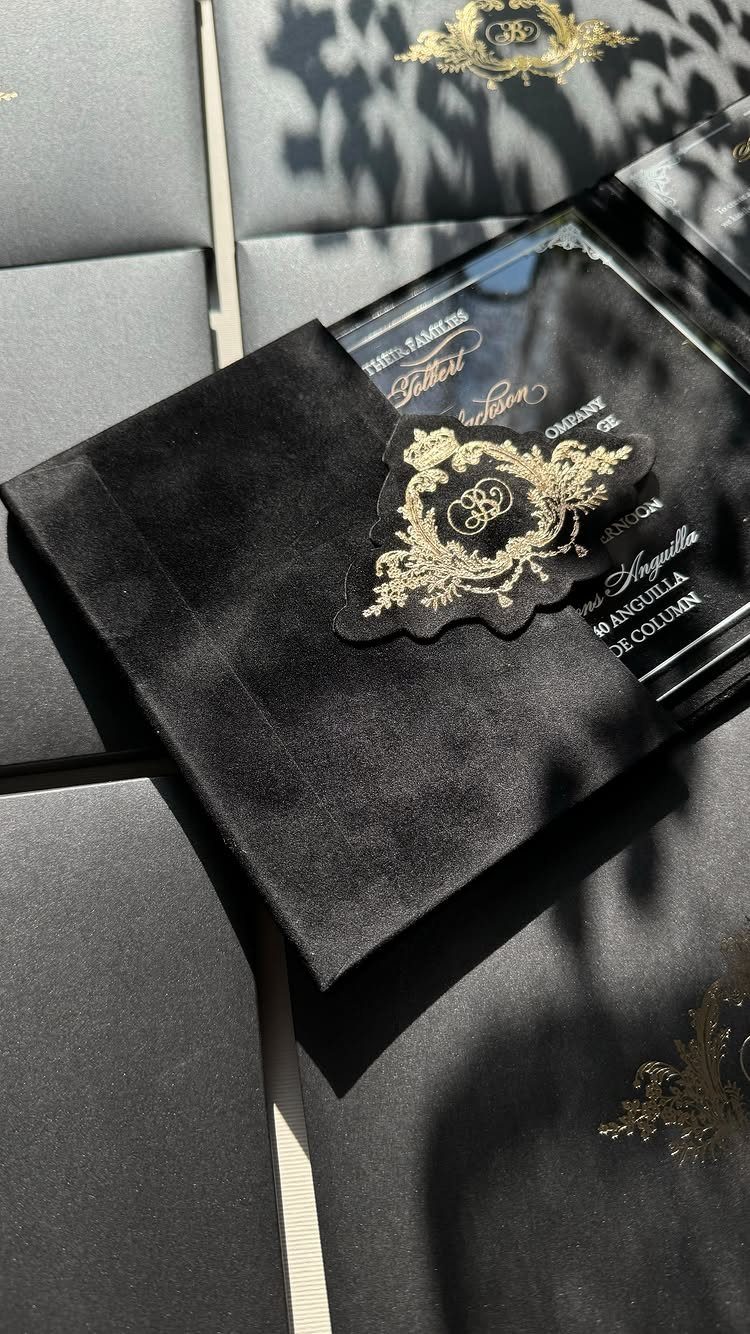
Velvet makes the folder itself the gift, and a clear acrylic card slipped inside lets the gold text float against the dark fabric. Black with a gold crest reads formal, so it suits an evening wedding.
This is a splurge, and I would limit it to a single folder piece plus the acrylic card. Send the RSVP as a link or a plain card instead of adding more luxury pieces.
12. Embossed Border Wedding Invitations
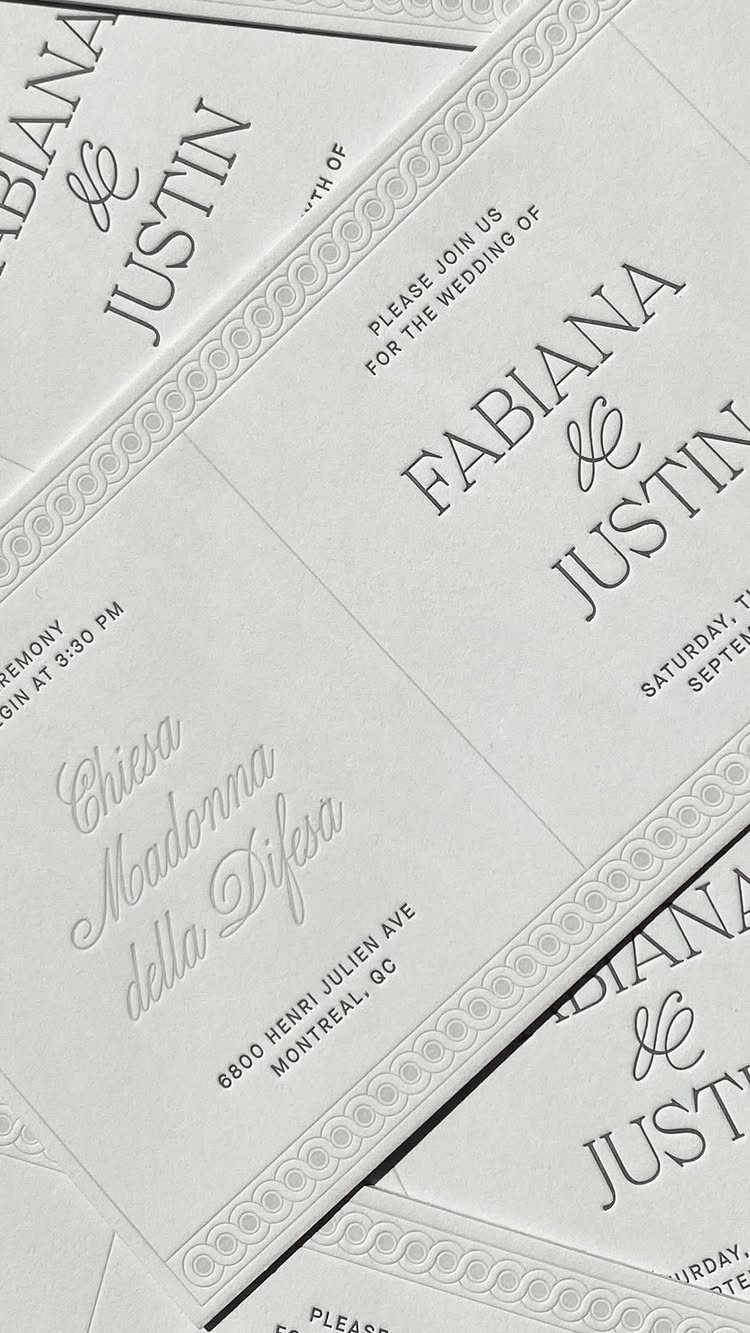
Embossing raises the border out of the paper, so white stock with black type gets its decoration from shadow rather than color. You feel it before you read it.
Tight text suits an embossed border: names on one line, with the church or venue below.
A border already does the framing, so skip extra flourishes. Ask the printer for a sample to touch, because deep embossing looks different in person than on a screen.
13. Wax Sealed Wedding Envelopes
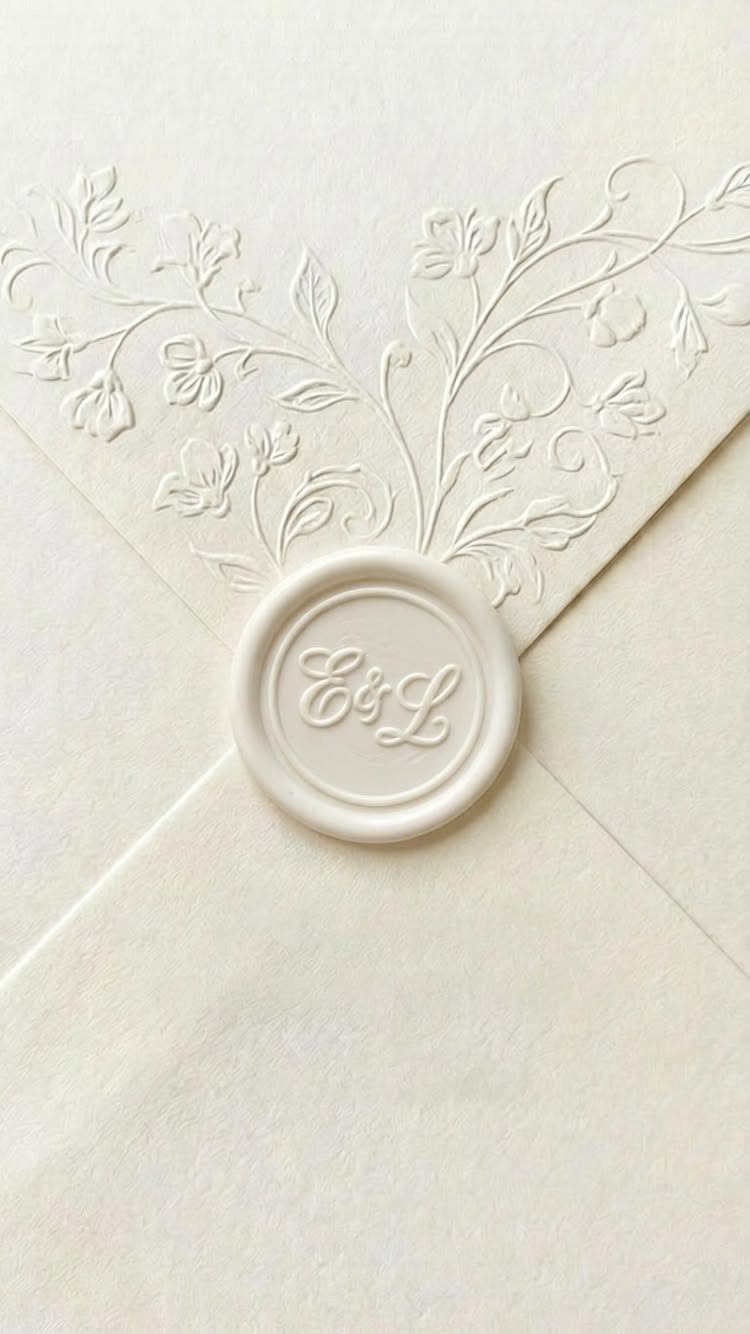
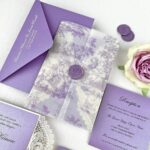
A wax seal turns a closed flap into the first piece of decoration a guest touches.
Here the white wax carries an "E & L" monogram, and it sits on a flap already embossed with flowers, so the envelope needs no liner or sticker to feel finished.
Keep the monogram to your two initials, as this one does. A custom stamp is a one-time cost, and you reuse it on every envelope, so it suits a small guest list best.
Seal the flap on a household’s envelope only after the card is inside, and make a few extra for smudges. Since the embossing already fills the flap, I would skip a second decoration.
When to Send Invitations
Plan to mail invitations 6–8 weeks before the wedding, and add time if guests are traveling from out of town. For a destination wedding, send them 3 months out.
Earlier is safer, though. Some planners suggest 4 months for a local crowd and 5 months when many guests need flights and hotel rooms, since travelers need time to price things before your RSVP deadline hits.
When money is limited, I lean toward sending early. Your caterer will want a final count, and late replies are what push couples into chasing people by phone.
Set the reply-by date at least 2–3 weeks before the wedding. Many couples ask for RSVPs a full month ahead, which leaves room to follow up with stragglers.
Collecting Guest Addresses
Chasing addresses by text is slow, and a wrong street number means a returned invitation and a second stamp. A collection tool fixes this before you print a single envelope.
Services like Contact Collectors let you send one link. A shared online form lets guests type in their own addresses, and each entry drops straight into your guest list without you retyping a thing.
Another route is to add a question to a digital invitation or RSVP. You can ask for a mailing address in an open-ended box, and the same form can ask about meal choices.
If your tool lets you tag guests, sort them by meal as replies arrive. You can hand the caterer your counts for chicken, fish and vegetarian without rebuilding a spreadsheet.
Printing Options
3 methods cover most budgets, and the price gap between them is real.
Thermography gives shiny, raised lettering without pressing into the paper. It was long nicknamed poor man’s engraving, and it is the cheaper way to get raised type, though it lacks the fineness of true engraving.
Letterpress presses the type into the paper, and the deep bite you can feel is a more recent look. Many letterpress printers are small shops, so ask for a sample and a turnaround time.
Digital printing is the plain, flat option and usually the one that fits a modest budget.
Printed invitations tend to cost more and are less eco-friendly than digital ones. For one piece with real texture, I would pick letterpress for the main card and print everything else digitally.
Frequently Asked Questions
What information should be included on wedding invitations?
Put the couple’s names, the date, the time, the ceremony location and any reception details on the card.
Guests should see those at a glance. Extras like maps, hotel info or attire notes can go on a separate details card or a wedding website, which keeps the invitation itself clean.
Can you send wedding invitations instead of save the dates?
Yes, especially when time is short. A save the date is not a substitute for the invitation; it only announces the couple and the date so people can hold the weekend, book flights and ask for time off.
If you skip it, mail the invitations earlier than the usual 6–8 weeks, and add more lead time for out-of-town guests.
How do I collect addresses for my wedding invitations?
Send guests one link through a service like Contact Collectors, and let them type in their own addresses.
Each entry goes straight into your guest list, so you never retype anything. You can also add a mailing address question to a digital invitation or RSVP form, which can ask about meal choices at the same time.
When should wedding invitations be mailed?
Most invitations go out about 6–8 weeks ahead, and guests coming from far away need a little more cushion than that.
Destination weddings call for a longer runway, so plan on mailing about 3 months out. If you are unsure, mail early: anyone traveling has to compare fares and rooms well before your reply-by date arrives.