A single chalkboard sign at the entrance and a multi-page booklet with photo covers are both programs, and they sit at opposite ends of the print bill.
What picks yours is how much you have to say: a names-and-date welcome fits on one sign, one flat card or one fan, while a full order of service, readings and cultural rituals need pages or a numbered timeline.
1. Names of the Couple
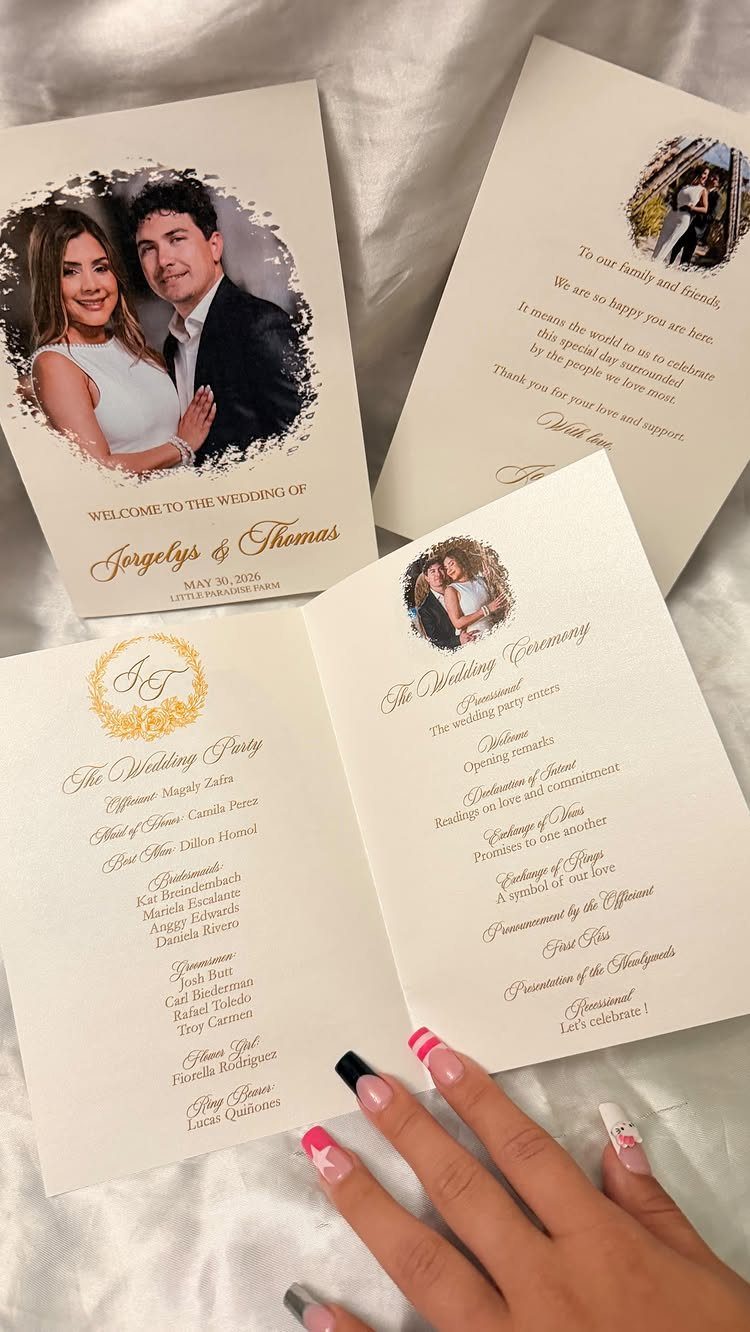
Printed names do the first job a program has: telling a guest whose wedding they are sitting in.
Put them at the top, large, with an ampersand or a plus sign between them, and let the date and venue sit smaller beneath.
Gold ink on a photo cover looks rich, but it adds to the print bill, so I would ask the printer to quote foil against plain gold-toned ink and settle the choice after seeing both numbers.
2. Order of Ceremony
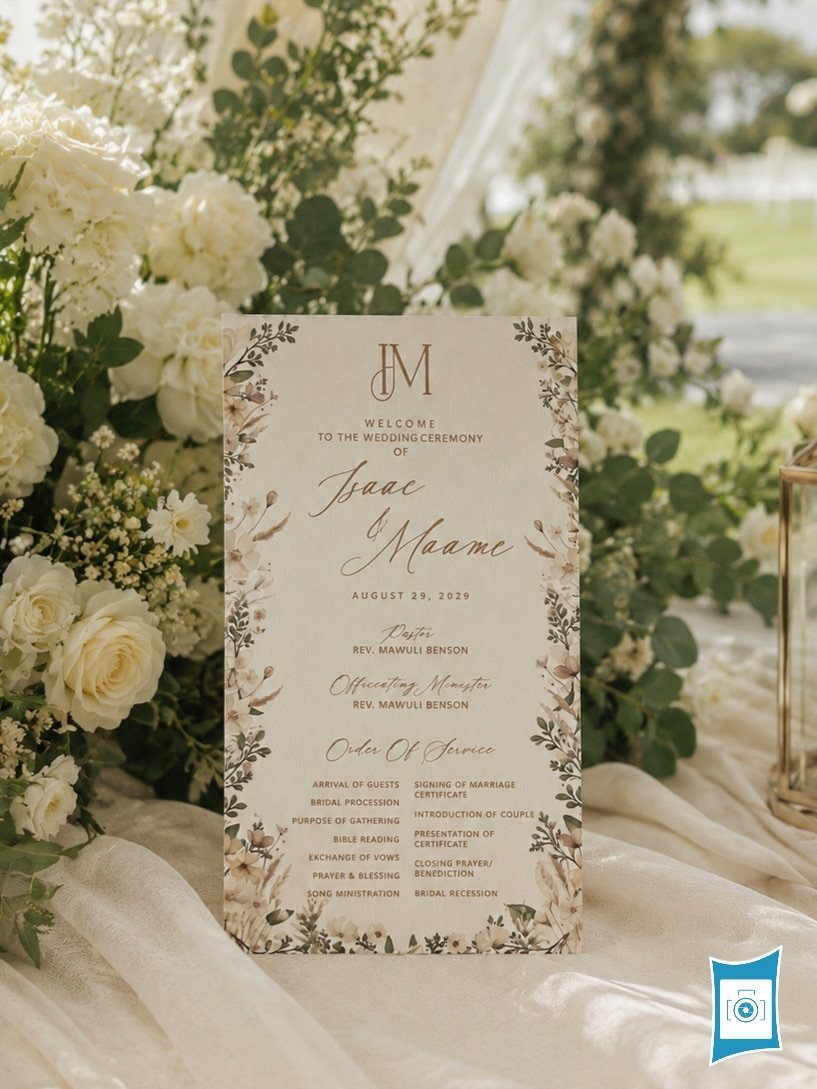
Guests glance at a program for one reason: to find out what happens next. A clean "Order of Service" list answers that, and it needs nothing fancy to work.
Keep each line to a single event, in the order it happens, such as processional, vows, ring exchange and recessional.
Add the date near the top, as the example does, so the card still makes sense as a keepsake. If a reading or song is part of the ceremony, name who is giving it.
3. Wedding Party
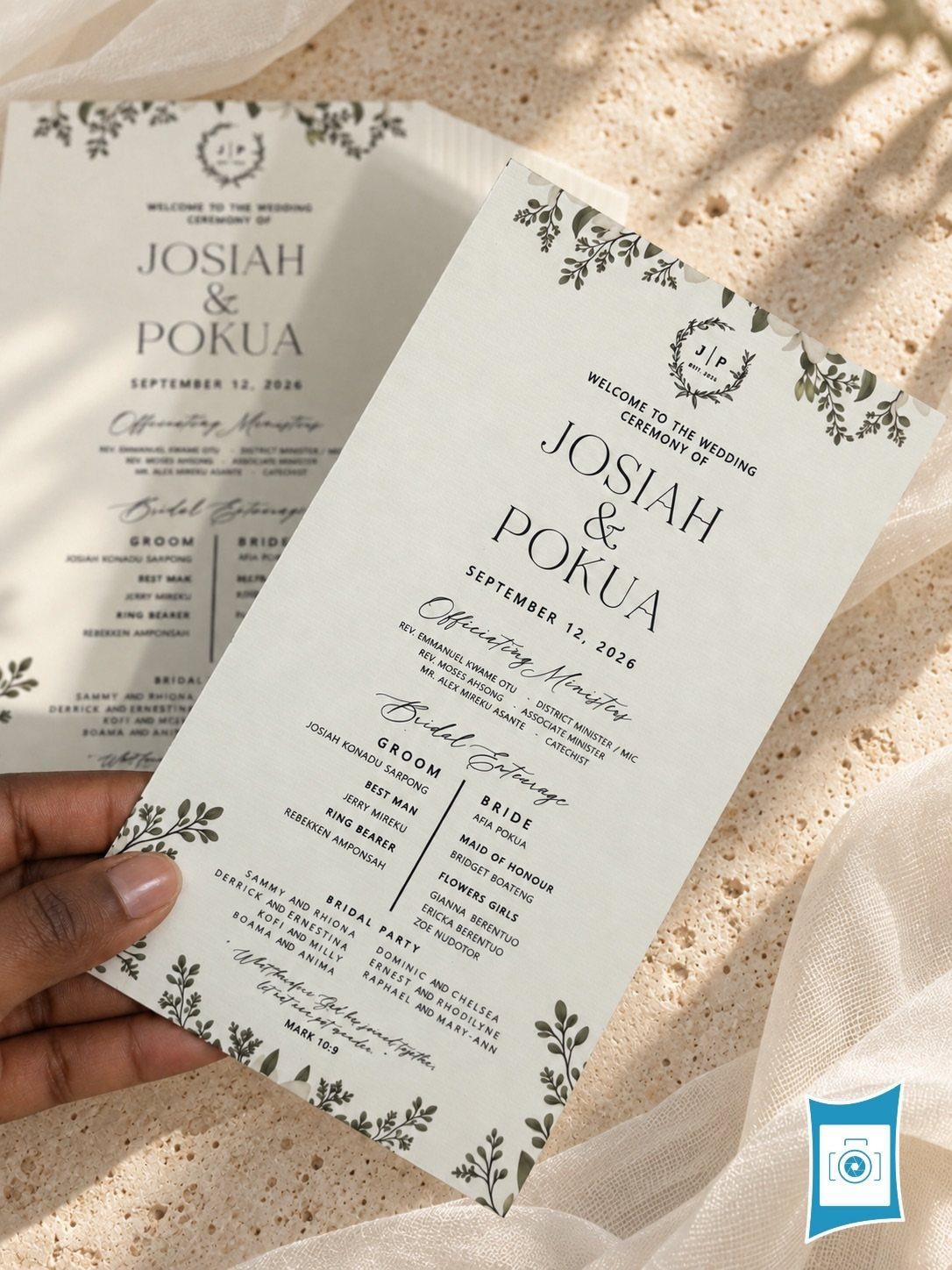
Half the room usually has no idea who the bridesmaids’ counterparts are, or who is leading the ceremony. Listing the officiant and the wedding party by name and role fixes that on one panel.
Group the names by role, with the officiating minister first and the entourage after.
Check spellings with each person before you print; a misspelled name on paper is the one error everyone notices. A small leaf motif around the edge, like the one visible here, fills space without crowding the list.
4. Thank You Note
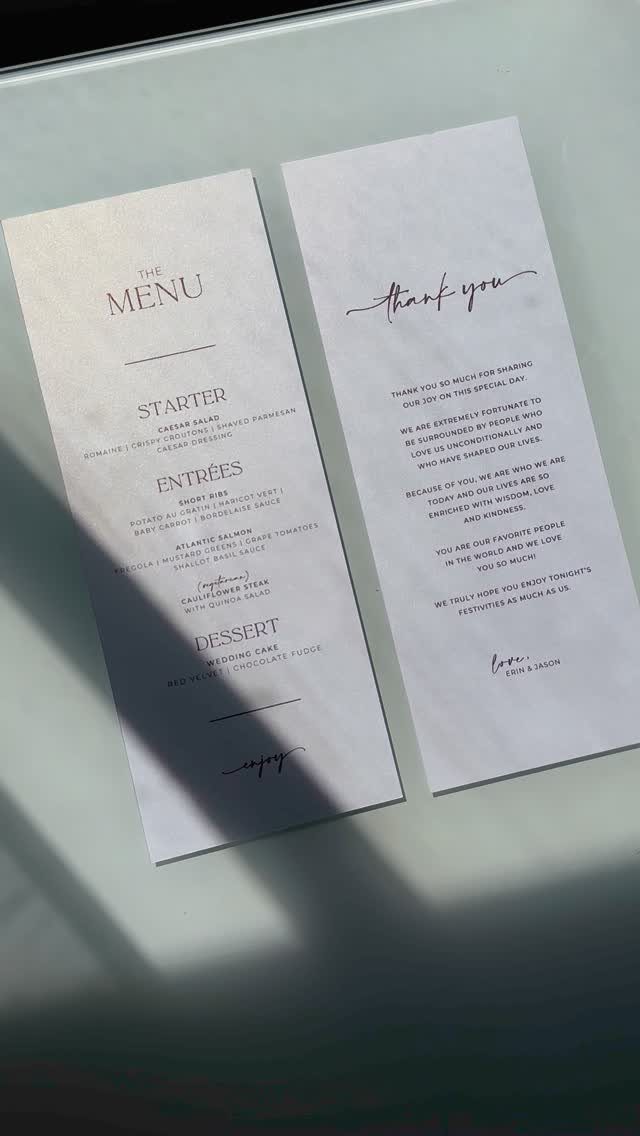
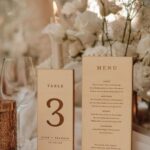
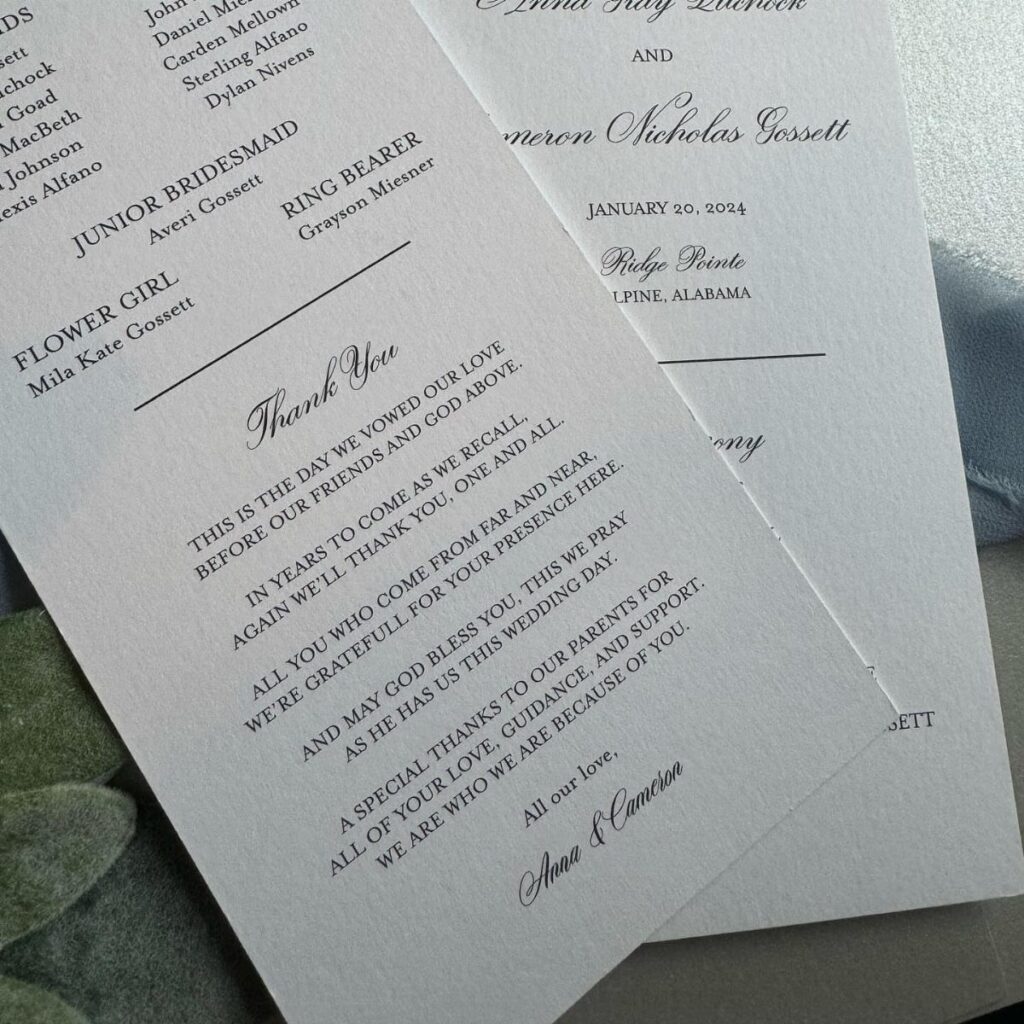
A thank you printed into the day itself costs almost nothing and reaches every guest. A short note signed by both of you, set beside the menu at each seat, says it before anyone has to ask.
Write two or three sentences in your own voice and sign with first names.
Printing it on the same white stock as the menu keeps the place setting tidy. It does not replace mailed thank you cards for gifts; it only covers the thanks owed for showing up.
5. Fan Programs
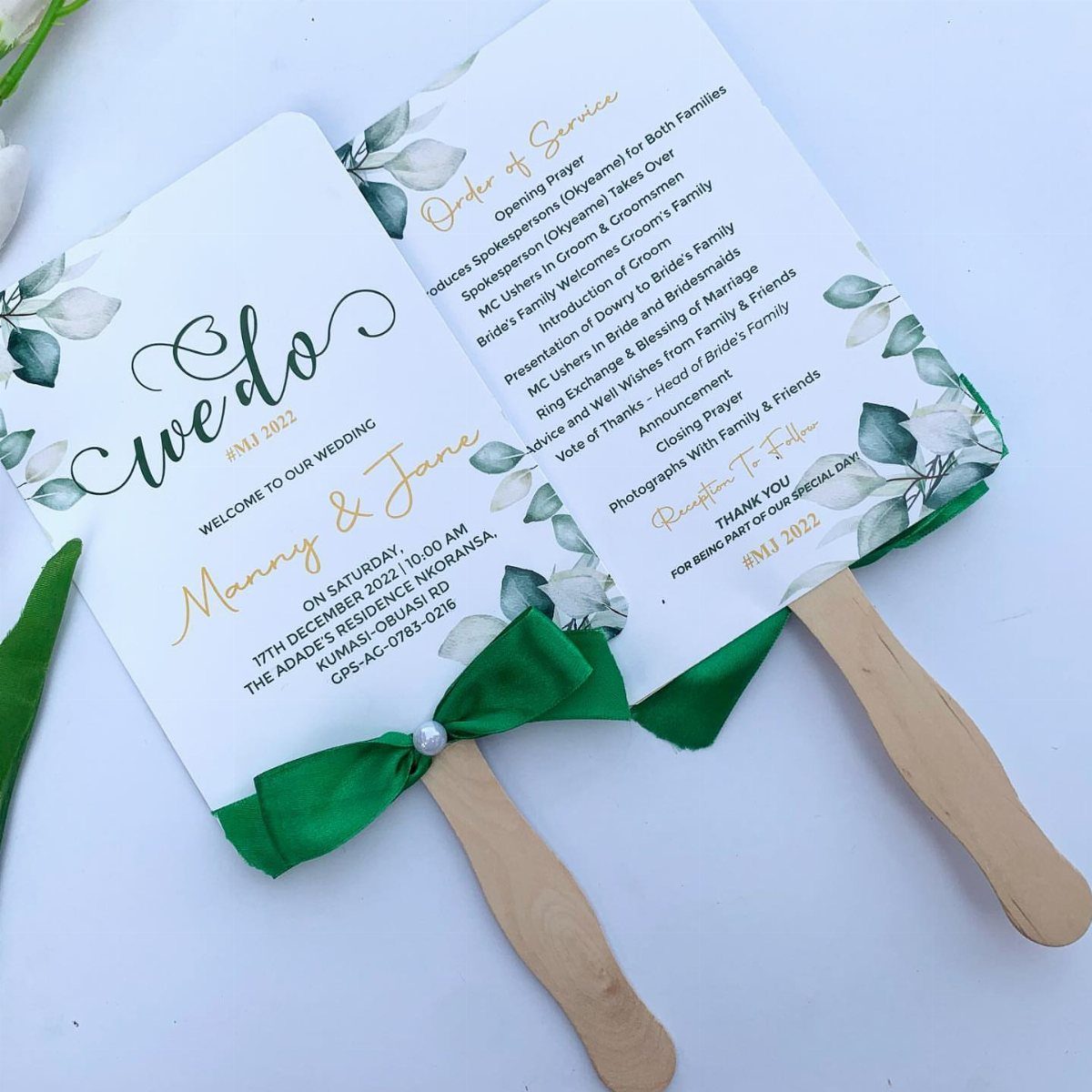
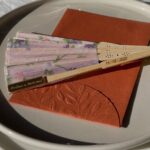
Fans earn their place when the ceremony is outdoors or the room runs warm. Guests use them, so the details you print on them actually get read.
I prefer a wooden handle with a ribbon tied at the base: it feels sturdier than a flimsy stick. Keep the text short, since a fan has little room.
An "Order of Service" and the wedding day itself fit well on a fan, and a floral border gives it character. Order a few extra for latecomers.
6. Program Booklets
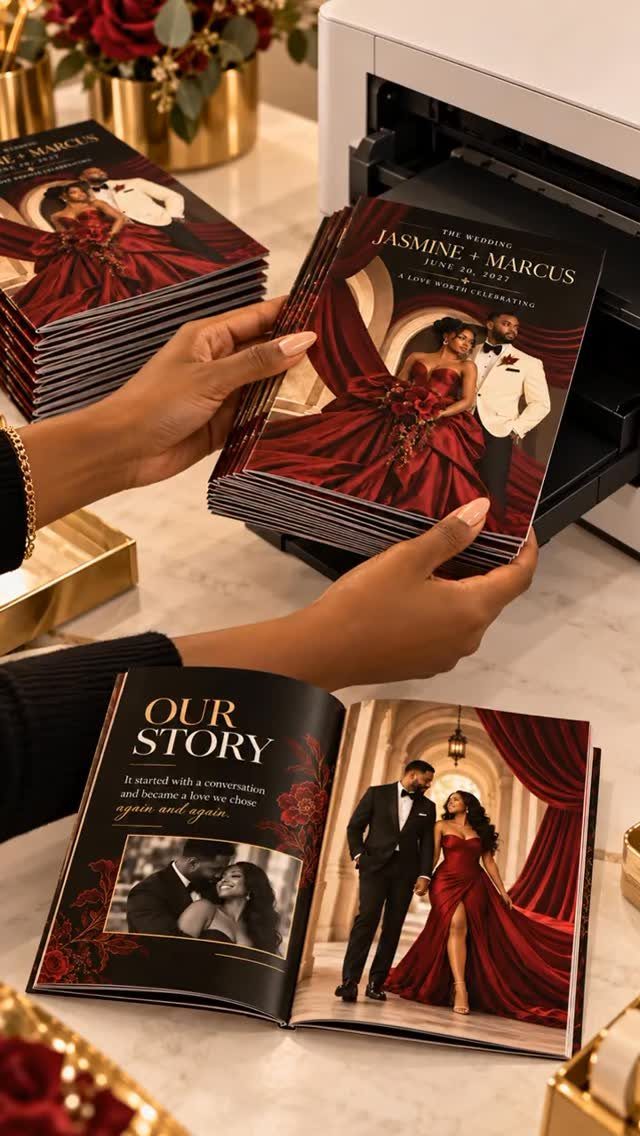
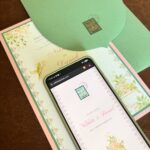
A booklet is the choice when you have more to say than a single card holds. Several pages leave room for the order of service, an "Our Story" spread, and thank-yous to family.
Pick it only if you will actually fill the pages; a half-empty booklet looks padded. A photo of the two of you on the cover, in your wedding clothes, makes it a keepsake rather than something left on a chair.
Expect it to cost more than a flat card, so price it before you plan on it.
7. Cultural Elements
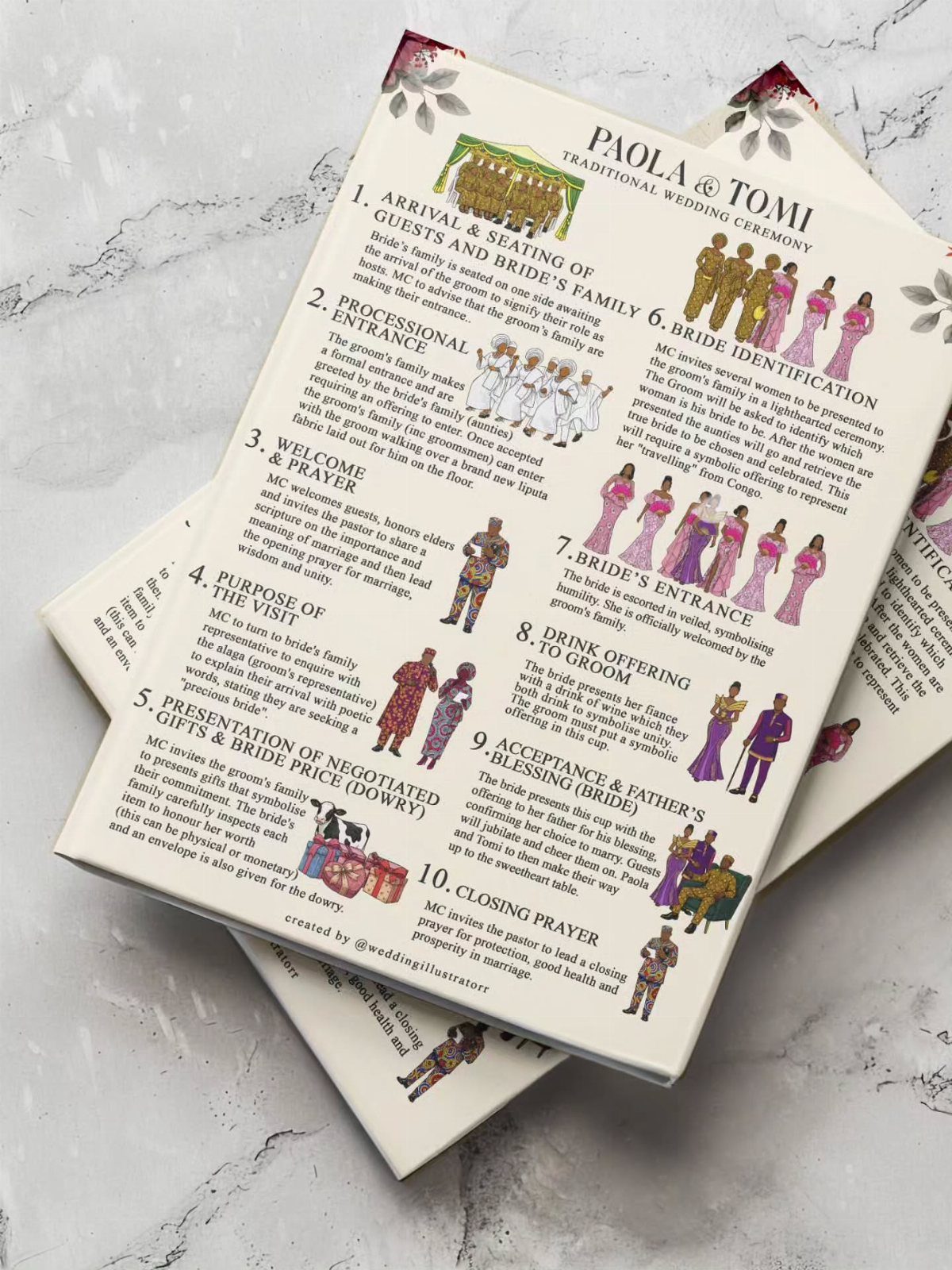
Two cultures can share one sheet of paper. Numbered steps for a traditional ceremony, with small illustrations of people in traditional attire, let guests follow rituals they may have never seen.
If your families come from different backgrounds, give each tradition its own numbered step and a line of plain explanation.
Guests from the other side will then know what is happening and why. I would keep the illustrations the same size for both, so neither culture looks like an afterthought.
8. Tassel Accent Cards
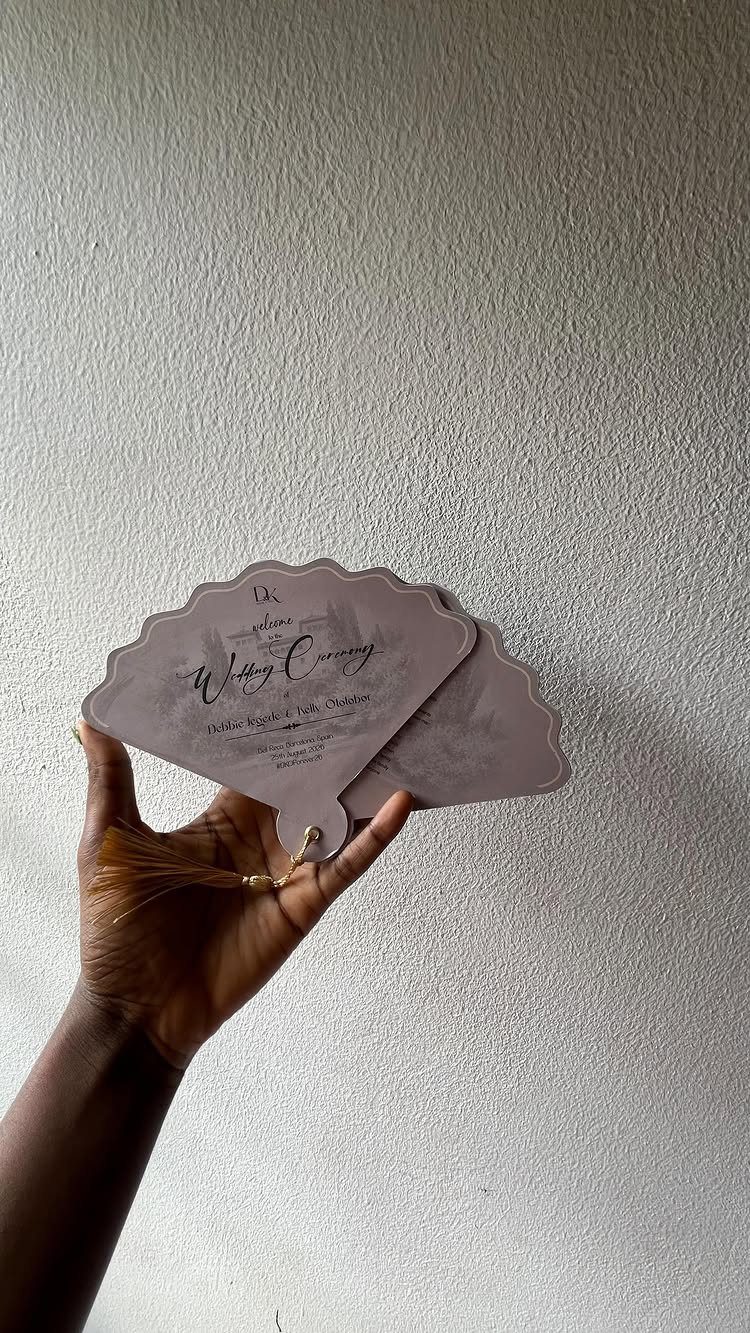
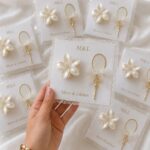
A gold tassel turns a flat card into something guests want to hold. The scalloped edge adds softness, and the mauve stock keeps it from looking like every white card in the room.
Tassels usually mean more hand assembly and add cost per piece, so price the full count first.
Keep the wording short, a welcome line and your names, so the card stays clean. I would pick a tassel that matches your ink or foil color.
9. Photo Cover Programs
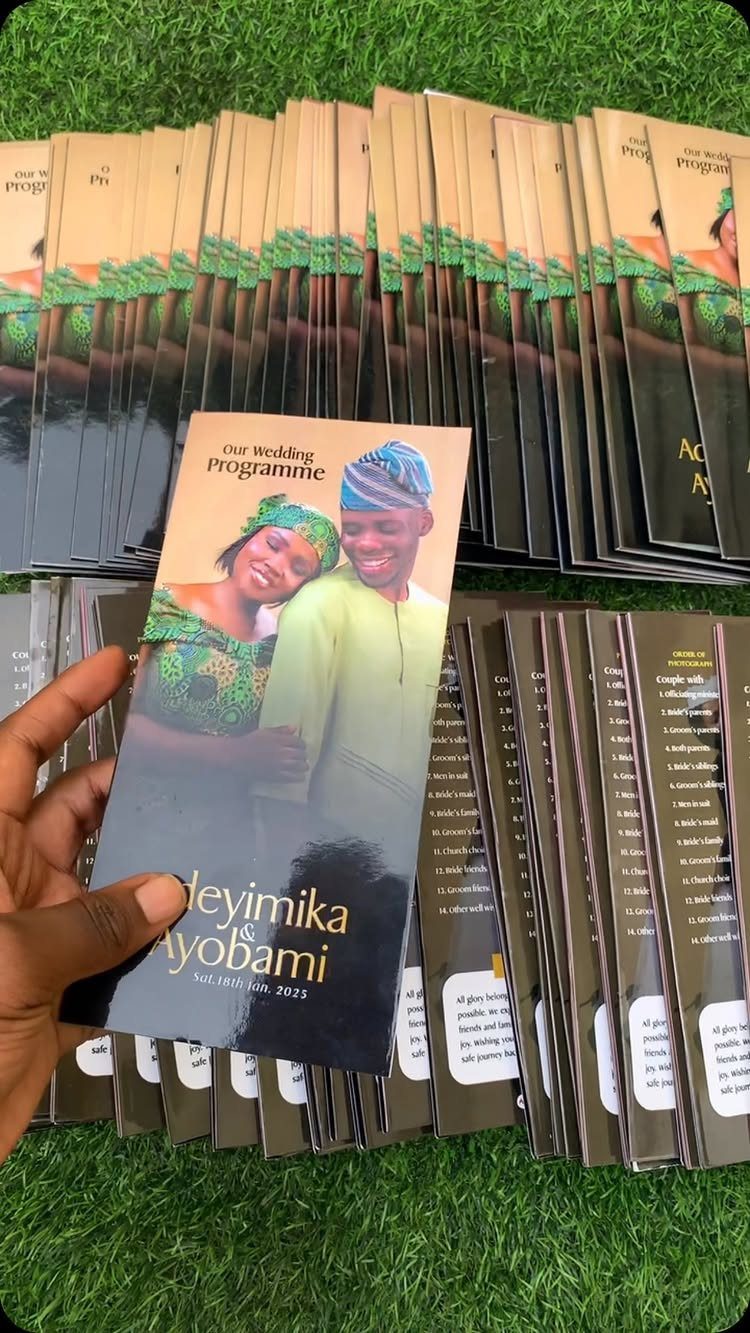
Your faces on the cover tell guests this is about the two of you before they read a word.
Choose a photo with plenty of plain space, so the title and names stay readable. Print more than your guest count, since a stack on the grass will disappear fast once people take them home.
Check that the file is high resolution before it goes to the printer, because a soft photo looks worse on paper than on a screen.
10. Illustrated Ceremony Timeline
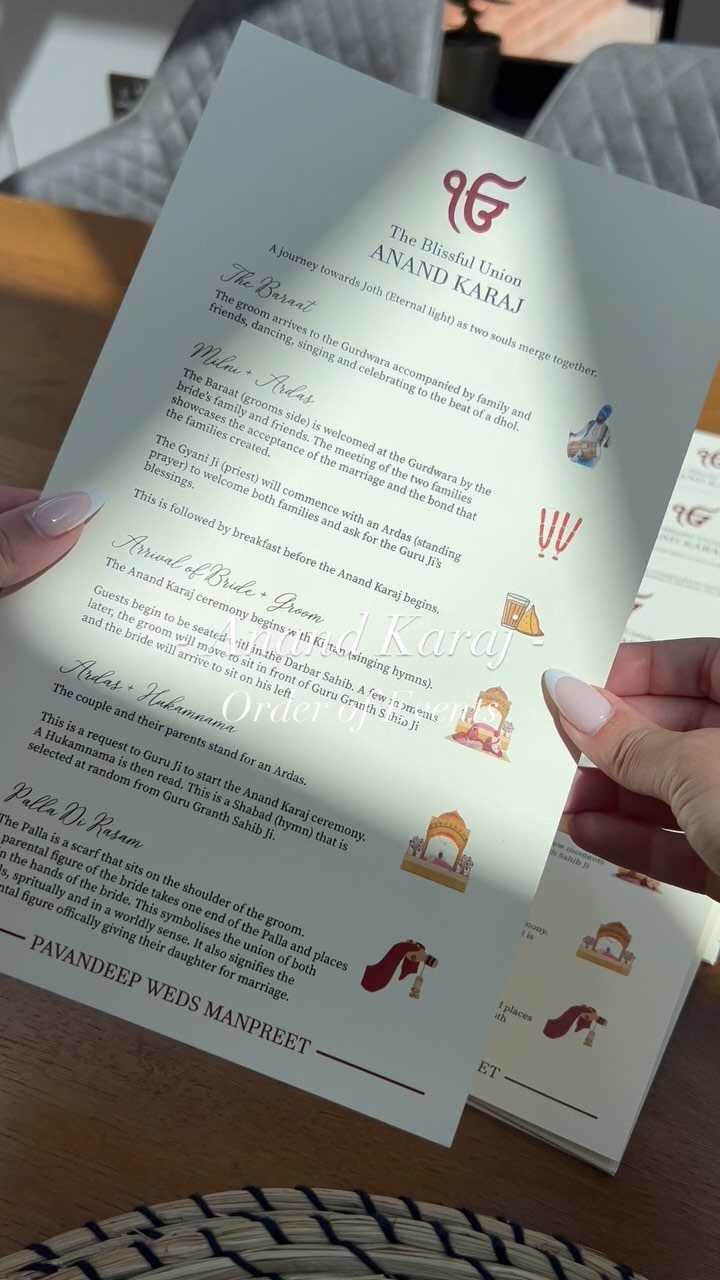
Small icons beside each ritual do the explaining for you. For a ceremony with many steps, like an Anand Karaj, an illustration next to each line lets guests who don’t know the tradition follow along.
Pair every picture with one short sentence of plain English.
Keep the icons the same size and style so the page reads as one design. Color adds cost on some print runs, so ask your printer whether full color or a single ink suits your budget.
11. Calligraphy Card Programs
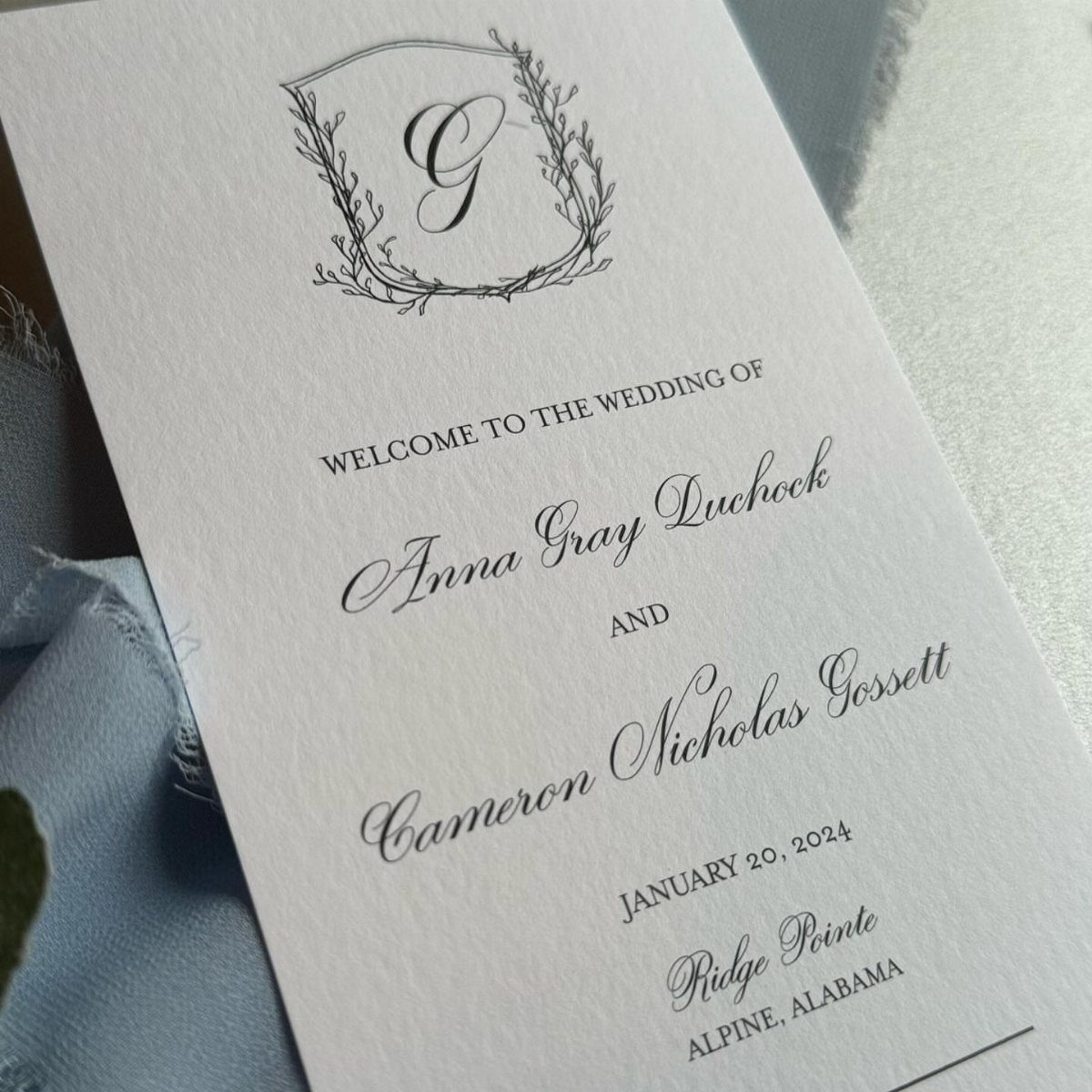
Black script on white paper, a small botanical crest, and nothing else: this is the program I would choose if I wanted it to look expensive without being expensive.
Set the welcome line in calligraphy and keep the names, date and location in a plain type, so the card stays easy to read at a glance.
Script is lovely but harder to read at a glance, so use it for the welcome line and set the details in a plain type. A single flat card also keeps printing costs down compared with a booklet.
12. Chalkboard Sign
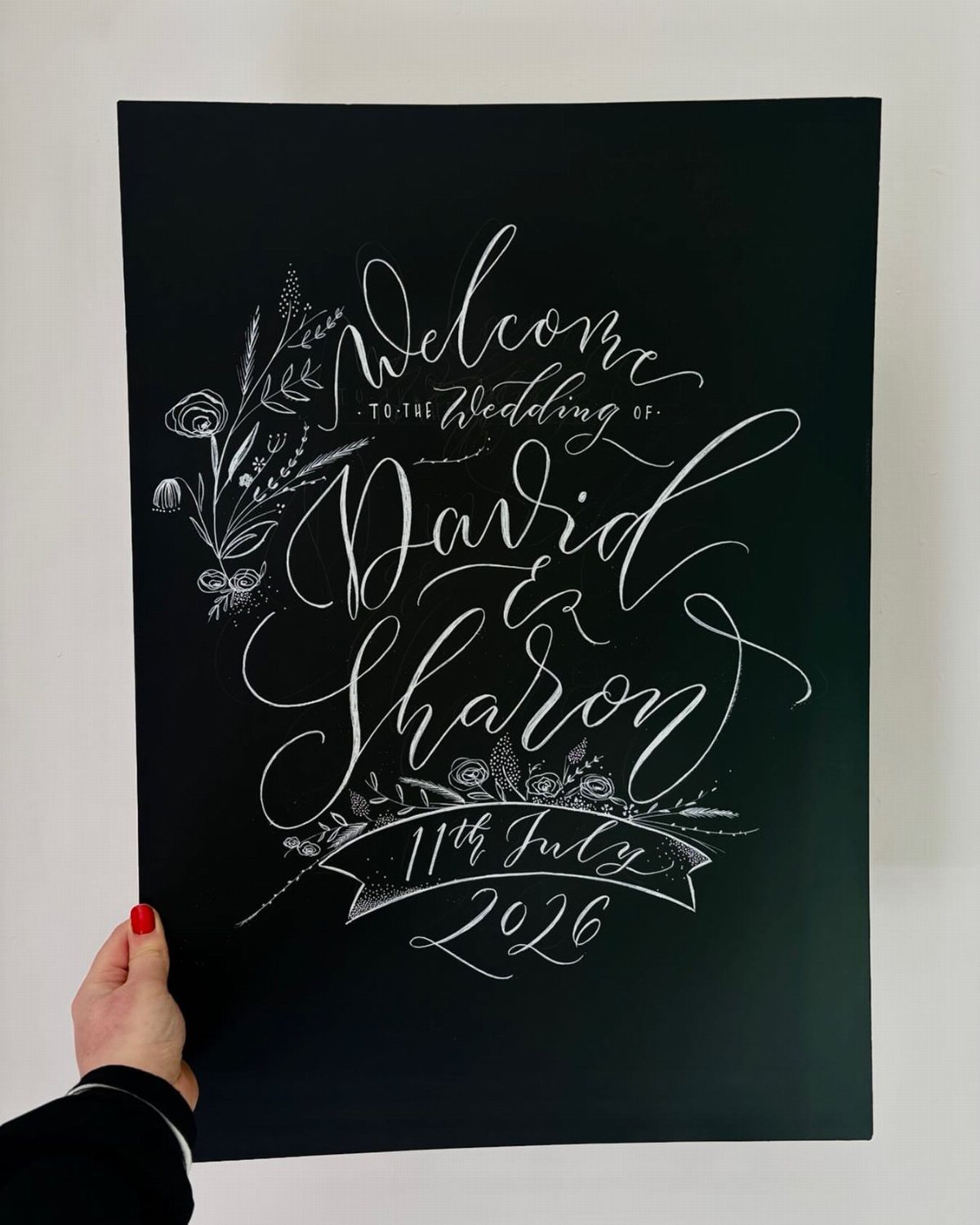
A chalkboard sign gives you one program for the entire crowd. White lettering on black, with a floral border, puts the names and the wedding day where everyone passes.
Place it at the ceremony entrance on an easel, so guests read it as they arrive.
Hand lettering takes time, so settle the wording early and keep it to the names and the wedding day. One sign costs far less than printing a card for each guest, which suits a tight budget.
What to Include in a Program
4 elements carry a program: a cover with your names, the date, the venue name and the city; the order of the ceremony, with song titles if they’re settled; and the wedding party listed by name and role.
A short thank-you to guests who traveled is a kind addition, but no one will miss it if it’s left out.
Beyond that, everything is optional: a welcome note of 2–4 sentences, citations for readings (title, source, reader), a line remembering loved ones who have passed, and an unplugged request that asks guests to pocket their phones during the vows.
If the ceremony blends faiths, I’d add a short note explaining any ritual that guests might not recognize.
Leave out registry information, since guests already have it. Guests read programs while the ceremony is under way, so short sections that can be taken in at a glance work best.
When to Order Programs
Order 4–6 weeks before the wedding. That window leaves time for proofing, one round of corrections and shipping, without paying rush fees.
Before you approve the proof, check the type size. Choose a large type size and set the main text in a clear, legible typeface, since grandparents and anyone with weak eyesight will be reading in whatever light the venue provides.
Save fancy cursive and script for place cards or signage.
If the text will not fit at a readable size, cut words rather than shrinking the type.
How Many Programs to Print
Start from your guest count, not your invitation count. One program per guest is the safe number, but families often share, so 75–85 percent of your total guests is usually enough.
Then add 10–15 extras. That extra margin covers late arrivals, damaged copies and a few keepsakes for your memory box.
Printers price by quantity tier, so get a quote at your base number and another at the number with extras before you place the order. The jump is often small, and running short costs more than a few spare copies.
Frequently Asked Questions
What are some cool wedding programs?
A fan program suits an outdoor ceremony or a warm room, because guests actually use it and read what’s printed on it.
A chalkboard sign on an easel at the entrance gives the whole crowd one program, and it costs far less than a card for every guest.
If you have rituals guests may not know, such as an Anand Karaj, a timeline with a small icon and one plain sentence beside each step lets them follow along.
How do you list the wedding party on the wedding program?
Group the names by role, with the officiant first and the rest of the wedding party after, giving each person’s name and role.
Listing the relationship, such as brother of the bride, is a kind way to acknowledge them. Have each person confirm their own spelling before the file goes to print, because a wrong name is the first thing people spot.
What if someone in the wedding party has passed away?
A single line of tribute does the job, something like "Remembering [Name], always with us."
A small boxed note near the bottom of the back page, headed "In Memory" or something similar, keeps it quiet and easy to find. It keeps that person part of the day without changing the rest of the layout.
How many wedding programs should I print?
Start from your total guest count and print about 75–85 percent of it, since families often share a copy.
Add 10–15 to that 75–85 percent number to cover latecomers, smudged copies and the one you’ll want to keep. Get quotes at both quantities, because the price jump is often small.